
Industrial photographers across the UK
Industrial Photographer UK for Manufacturing, Engineering, Logistics & Energy
UNP provides industrial photographers for working factories, engineering facilities, logistics operations, energy sites and infrastructure projects. We photograph the people, processes, equipment and surroundings your communications need to explain, with the shoot planned around site access and operational requirements.
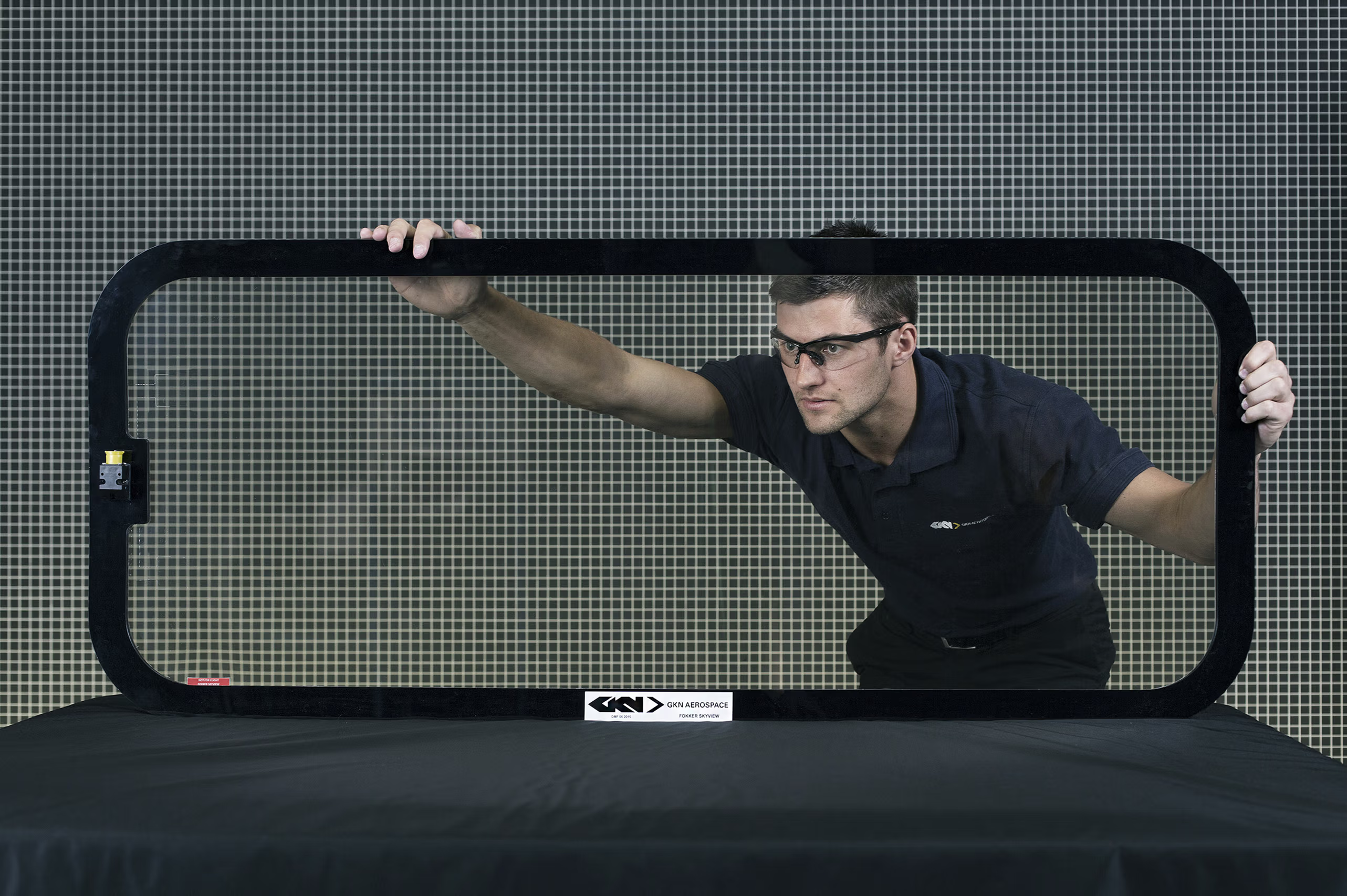
The photographs below show selected UNP work associated with GKN, BOC, Airbus and Aggregate Industries. Compare the working views, portraits, technical details and site photographs, then explore the full case studies or brief an industrial photographer.
An established photography service, with the work to show it
- Established 1997 Professional photography for organisational communications.
- 60+ UK photographers A national network matched to the location and brief.
- One central Picture Desk Briefing, allocation, scheduling and edited delivery.
- Four industrial case studies Manufacturing, aerospace, gases, materials and operational sites.
- One site or several Local assignments and coordinated national programmes.
Start with what the photographs must communicate
Show what happens here, not simply what is here
An industrial photographer makes complex working environments understandable through people, process, detail and scale. A plant overview and a close working photograph answer different questions. Your brief determines the combination.
For PR and trade media, that may be an engineer alongside the equipment behind an announcement. For recruitment, it may be working people and skills. A report, website or stakeholder presentation may need the wider facility, technical details and portraits together. These are photographic choices to plan before the visit, not gaps to discover during page design. Our Insight on what UK communications teams need from professional photographers explains the wider commissioning context.
The four selections below draw on different assignments from the UNP archive. They show the range of the photography, rather than presenting separate locations as a single shoot or claiming that archive views describe a site’s current configuration.
Evidence 01 · Manufacturing and engineering
GKN: the engineer, the task and the component
The GKN archive brings together manufacturing work, components, technical processes and environmental portraits. For a commissioner, the useful question is how the photographer will connect those subjects so the work is understandable, not merely recognisable.
Selected GKN work includes manufacturing photography in Filton, within our wider Bristol photography coverage, as well as assignments in Luton and Abingdon.


Keep the task visible
A working position, a tool and the part being measured can carry more information than a generic factory view. Wider and upright compositions give the communications team a choice without removing the activity from its setting.


Make room for the smaller scale
A cutting tool and an electronics bench need closer attention than the production floor. Include those details in the brief when reports, technical features or supporting page layouts need to explain the work at more than one scale.


Include the people who explain the work
Component-led pictures, workplace portraits and demonstrations are different requirements. Planning them together gives your team both operational photographs and people-led images without assuming that every person needs the same portrait treatment.


The Picture Desk · From brief to delivery
Plan the photography around the working site
Map → Match → Coordinate → Deliver. The Picture Desk joins up the assignment; the photographer concentrates on the people, equipment and activity in front of the camera.
The practical value is a prepared commission: the photographer knows what the communications team needs, the site knows what has been arranged, and the delivery requirement is clear before work begins.
Map
Identify the site, people, processes and available working windows. Establish the communications purpose, priority photographs, access conditions and publication deadline.
Match
Select a photographer for the industrial subject, location and photographic requirements: people at work, machinery, technical products, portraits or a combination.
Coordinate
Bring the site contacts, induction arrangements, visual references, restricted subjects and schedule into one brief. Keep changes connected while the photographer responds on site.
Deliver
Oversee the edit, colour and tonal balance, caption information and agreed file versions. Confirm the delivery route and any priority selects against the actual deadline.
Commissioning industrial photography
Choose the coverage your brief actually needs
An assignment can combine several photographic requirements. Tell us which subjects matter, which activities are available and where the finished photographs will appear.
Manufacturing and production
Factory floors, automated lines, machinery and people at work, photographed to explain production and capability. Relevant settings include automotive, aerospace, food processing and packaging.
Engineers, technicians and workforce
Working photographs and environmental portraits of engineers, apprentices, operators and project teams. The setting stays part of the story rather than becoming an anonymous background.
Technical products, components and processes
Complete product views, controls, tooling, surfaces and close working details. The choice can range from equipment in use to a separately arranged product photograph.
Research, testing and laboratories
Technical teams, bench work, instruments and specialist equipment, with attention to the context needed to understand the photograph and the restrictions that apply to the setting.
Logistics, warehousing and distribution
Warehouse automation, loading operations, drivers, vehicle fleets and the movement of goods, photographed with enough context to explain the activity and setting.
Energy, utilities and infrastructure
Operational teams, installations, storage, networks and investment projects. Coverage is planned around the location, permitted access and the particular equipment or activity required.
Facilities, construction and site progress
Buildings, plant, infrastructure and project milestones, including the people involved. See construction photography for a more dedicated project-progress brief.
Industrial portraits and site visits
Leadership portraits, technical demonstrations and stakeholder visits alongside the operational photographs. Corporate photography provides the wider people-and-business service.
Evidence 02 · Industrial gases, products and infrastructure
BOC: from a small fitting to an entire plant
The BOC selection shows why an industrial brief may need more than factory photography. Products, distribution, working people and infrastructure each call for a different distance, viewpoint and treatment.

Make differences in scale legible
A grouped product photograph lets viewers compare sizes, shapes and labels. Closer frames make surfaces and fittings visible; an upright alternative can support a different page layout. These choices are photographed deliberately rather than left entirely to later cropping.


Keep the person connected to the equipment
A workplace portrait, a handling task and a close working detail serve different communications needs. A short sequence can show who is involved, the surroundings and the point at which the person interacts with the equipment.


Photograph the detail and the infrastructure
A regulator requires a different composition from the Aberdeen refuelling station or a tall process installation. The brief should make room for both when the audience needs to understand the product and the wider operational context. The photographs are archive evidence, not operating instructions or a current product catalogue.


Prepare for the working environment
Agree access before planning the viewpoint
Photography must fit the site’s agreed access and operating arrangements. Include the relevant requirements in the brief so the photographer can prepare for the actual workplace, not simply the list of pictures.
Induction, PPE and escorts
Identify the required protective equipment, induction time, permits, escorts and security arrangements before the visit. Specific documentation or competence requirements need to be confirmed for the assignment. Our Insight on Photography Risk Assessment and RAMS looks at how those requirements can remain proportionate to the actual assignment and working environment.
Production and movement
Set out when processes and people will be available, where the photographer may work and which areas are restricted. Coordinate around site activity rather than assuming equipment or production can be interrupted.
Confidentiality and approval
Flag prototypes, screens, drawings, labels, people or areas that must not appear. Confirm any confidentiality agreement, image review or publication restriction as part of the commission.
Specialist or aerial requirements
Discuss any additional equipment, location restrictions or aerial requirement in advance. Drone photography is a separate planning decision, not an automatic part of every industrial visit. Our Insight on drone photography for construction and infrastructure explores the value of the aerial viewpoint.
For general workplace context, see the HSE’s health and safety guidance. It is not a substitute for the site’s own procedures or the arrangements agreed for the shoot.
Local sites · National programmes
Different sites. A consistent photographic standard.
UNP coordinates industrial photography across England, Scotland, Wales and Northern Ireland. Share the full location list when the brief spans factories, depots, laboratories or infrastructure sites.
A common brief can define the required mix of people, processes, portraits, details and site views while allowing the photographer to respond to each location. Consistency means balanced quality and a coherent finished set, not making different workplaces look identical.
For a separate example of centrally coordinated people photography across operational sites, see UNP’s national Amazon Armed Forces Day brief. It documents a multi-site PR portrait assignment, rather than machinery or production photography.
Give each location a useful role
One site may provide the production overview; another may offer a specialist process or the right person for a portrait. Identify what each location contributes, alongside the common photographs needed across the programme.
Use the UK photographer coverage map for geography and Multi-Location Photographer UK for the wider commissioning model.
Evidence 03 · Aerospace and technical environments
Airbus: production, people and precision
Selected Airbus-related assignments show wing production in Belfast, composite engineering, Portsmouth Defence & Space and technical products. The same service has to handle the scale of a production hall and the smaller details that explain what happens inside it.


Establish scale without losing the work
The wider production view provides the setting; the closer photograph makes the task visible. Upright frames also have a role when the height of machinery is central to the subject. Plan those alternatives when layouts need both overview and detail.


Connect the component with the people around it
A discussion, an environmental portrait and a machining detail are different ways to explain engineering. The composite sequence keeps those relationships visible without presenting every picture as the same kind of factory photograph.


Keep technical surroundings in the photograph
The Portsmouth selection combines people and equipment in the same setting. Include demonstrations, conversations and recognisable context in the brief where stakeholder or editorial communications need more than an isolated object.


Give the product its own treatment
Separate technical product photographs offer clear views of equipment, controls and connections. They complement the working coverage rather than being described as another stage of the same production process.


Photographs made for the way you will use them
A wider frame, a closer detail and a clear delivery brief
The final use should influence what is photographed on site. A trade-press story, annual report, recruitment campaign and technical presentation may all need different pictures from the same visit.
Upright and landscape compositions
Tell us about covers, page layouts, website headers and other planned uses. Photographing in both orientations can preserve the person, equipment and context without relying on one frame to fit every space.
People-led pictures and supporting detail
Plan a mix of establishing views, working photographs, environmental portraits and tighter details. It gives editors and designers useful options across PR, reports, presentations, websites and internal communications. Our Controlled Visual Variety Insight examines how distinct compositions can retain a coherent photographic standard.
Editing, colour and file versions
Photographs are professionally selected and edited, with colour and tonal balancing. Agree high-resolution and web-ready versions, file naming and folder arrangements around your team’s requirements.
Captions, usage and deadlines
Provide the names, site information and technical terminology needed for accurate captions. Confirm intended use, approval arrangements and deadlines; any rapid selects or press delivery should be agreed at briefing.
When a photograph describes a real process, location or person, its source and caption matter. Agree names, technical descriptions and any publication approval with the commissioning team; our Image Provenance Insight explains the distinction between a convincing image and an accountable photographic record.
Evidence 04 · Materials, plant and operational settings
Aggregate Industries: people, plants and places
Materials, loading equipment, site portraits and campaign photographs show different sides of the same organisation. This selected archive work brings several locations into the page without asking every location to produce identical pictures.


Show how material, plant and people relate
A working-site view establishes the operation. Moving closer to a feed point or a person among the pipework reveals another part of the story. Keep those views connected when the communication needs to explain a process, rather than simply display a machine.


Let the setting influence the composition
An outdoor portrait, a reflected plant view, waterside stockpiles and a tall silo require different viewpoints. The common requirement is clear, useful photography of each site, not a template imposed on every location.


Include the communications story beyond the machinery
The Immingham photographs show a machinery-led awareness campaign. A site information board and a person at the controls answer different needs again. An industrial brief can include campaign, workforce and operational pictures while keeping each context accurately captioned.


The photographs retain the Aggregate Industries identity recorded in the archive. The full case study contains the wider location sequences and brand context; these pictures are not presented as a record of current site arrangements.
Before the photographer arrives
What do you need us to photograph?
Send the location, timing, subjects and intended use. Add the practical constraints that will affect the shoot. These details let UNP assess the coverage and prepare a quote around the real assignment.
The site and available time
Site addresses, dates, arrival arrangements, the available photography window and a contact who can confirm local access and scheduling.
The people and priority pictures
People to photograph, processes to show, key machinery or assets, planned portraits and the photographs that matter most to the communication.
The operational requirements
Induction, PPE, security, escorts, restricted subjects and any confidentiality or approval requirements. Flag specialist requirements before allocating the photographer.
The intended publication
Where images will appear, layout references, required orientations, caption information, usage terms, file versions and the delivery deadline.
Send the brief through Book a photographer or contact the Picture Desk. The photographs on this page provide a starting point for discussing the treatment your own organisation needs.
Commissioning guidance
Industrial photographer questions
What does an industrial photographer photograph?
People, machinery, products, processes, facilities and infrastructure in working environments. The mix can include manufacturing, engineering, logistics, energy, utilities, construction, technical detail and workplace portraits.
Can you photograph inside a working factory?
Yes. Photography can take place within a live manufacturing environment, subject to the site’s agreed access, operational and safety arrangements. The schedule needs to account for when the required people and processes are available.
Do your photographers work with PPE and site inductions?
Yes. Include PPE, induction, escort and any other access requirements in the brief. Requirements specific to your site need to be reviewed and confirmed before the assignment.
Can the shoot include engineers, employees and leadership portraits?
Yes. Working photographs and directed environmental portraits can be planned together. Identify who needs to be photographed, where they will be available and which parts of the workplace may appear.
Can UNP cover several industrial sites?
Yes. The Picture Desk coordinates the master brief, locations, scheduling and delivery, with photographers matched to each assignment. Shared references and image requirements help maintain a coherent result across different sites.
Can you supply both landscape and upright photographs?
Yes, where the subject and agreed brief allow. Tell us about planned layouts before the shoot so the photographer can make distinct compositions with the right balance of people, equipment and surrounding space.
Can we use the images for PR, reports, recruitment and websites?
These are all uses that can be included in the commission. Explain the intended channels and any ongoing need for reusable photography so the image selection, file versions and usage terms can be agreed accordingly.
How are confidential areas or technical subjects handled?
Identify restricted rooms, prototypes, screens, drawings, labels and other sensitive subjects before the visit. Confirm any confidentiality, client review and publication approval requirements as part of the brief.
What information is needed for a quote, and how quickly can images be delivered?
Start with locations, dates, expected duration, subjects, access requirements and intended use. State the publication deadline, including any priority selects, so the coverage, editing and turnaround can be confirmed before booking.
From the UNP archive
Evidence behind the service
Go beyond the selections on this page. Explore the complete GKN, BOC, Airbus and Aggregate Industries case studies for more working sequences, locations, portraits and technical photography.


Stay informed
Explore UNP Insights for practical thinking on commissioned photography, visual communications, image provenance and professional image management.
Ready for your next story?
Let’s work together.
Share your brief with our central UK Picture Desk and we’ll assign the most appropriate local photographer, coordinating everything from initial briefing and scheduling through to fully edited, press-ready delivery.
- Press & PR
- Corporate & Events
- Business Headshots