
Photography Risk Assessment • RAMS • Public Liability Insurance • Proportionality
40 Minutes of Paperwork for a 60-Minute Shoot
Are RAMS and PLI processes proportionate?
Risk assessments, method statements and insurance checks can be entirely appropriate to professional photography. But a useful process should respond to the work being undertaken, the location and the real risks involved—not simply reproduce the same administrative burden for every assignment.
- Central proposition
- Good governance is not the absence of paperwork. It is asking for the right information, at the right level, for the actual risk.
- Risk assessment
- Identify the hazards that genuinely arise from the assignment, who could be affected and the practical controls needed to work safely.
- Method statement
- A method statement can explain how work will be carried out safely, particularly where the activity is complex, unusual or higher risk.
- Shared information
- The photographer knows the photography. The client or site knows its local hazards, access arrangements and operating conditions.
- Public Liability Insurance
- Insurance evidence can be essential, but the required level is not identical across every client, site or type of assignment.
- UNP test
- We applied the same question to our own process: verify stable information once, reassess what changes and retain human review.
Hazards • Controls • Practical Safety
What is a photography risk assessment actually for?
For a photographer, a risk assessment should help answer practical questions. What will the photographer actually be doing? What equipment will be used? Where will people be moving? Is the work taking place in an ordinary office, beside operating machinery, on a construction site, around vehicles or from an elevated position?
The purpose is not to produce the longest possible document. It is to identify hazards that matter, understand who might be affected and establish controls that make the work safer.
The Health and Safety Executive describes risk management as a step-by-step process for controlling workplace risks. Its guidance asks organisations to identify hazards, assess the risks, put controls in place, record significant findings where required and review those controls when circumstances change. HSE’s guidance on managing risks and risk assessment also contains one particularly useful sentence.
That is not an argument against documentation. HSE also explains when significant findings need to be recorded. The distinction is between documentation that supports safe working and documentation that becomes an end in itself.
Photography makes this distinction particularly visible because the same professional activity can move between radically different environments. A handheld-camera portrait in a meeting room and photography inside an operational industrial plant are both professional photography assignments. They plainly do not present the same risks.
PPE • Site Information • Access Routes
Risk becomes meaningful when it is connected to a real place
Site briefing, local rules, PPE, routes and operational conditions can materially change how a photographer works.


Risk Assessment • Method Statement • Safe Working
Risk assessment and method statement are not the same thing
The two are commonly combined into the acronym RAMS, but they perform different functions. A risk assessment identifies hazards, considers the likelihood and seriousness of harm and establishes the controls needed.
A method statement describes how the work will be carried out safely. In its Health and Safety in Construction guidance, HSE says method statements are not themselves required by law, but can be an effective management tool, particularly for higher-risk, complex or unusual work.
That construction guidance should not be transplanted mechanically into every photography commission. Its value here is conceptual. The greater the complexity of the activity, the more useful a clear description of the safe working method can become.
For a photographer carrying one camera into a controlled meeting room, the relevant method may be extremely straightforward. Add mains-powered lighting, stands, cables, ladders, moving vehicles, restricted plant areas or working at height and the situation changes.
Verification • Change • Reassessment
Verify stable information once. Reassess what changes.
Some information about a professional photographer is relatively stable. Identity, contact details, a current Public Liability Insurance certificate and other standing evidence do not become newly true every time the photographer accepts another commission.
Other information is assignment-specific. The address changes. The activity changes. The equipment changes. The people present change. Access arrangements, PPE, vehicles, machinery, weather, public interaction and the hazards controlled by the site may all change.
A proportionate process should understand that difference.

Photographer • Client • Site Knowledge
The photographer knows the photography. The client knows the site.
There is an important practical limit to what a photographer can meaningfully declare before receiving information from the commissioning organisation or site.
The photographer should know whether they intend to use handheld cameras, lighting, stands, cables, a step-up or ladder, a drone, bulky equipment or another method that changes the way they will work.
The site may be better placed to know where vehicles operate, which routes are permitted, whether an induction is required, what PPE is mandatory, whether machinery will remain live, which areas are restricted and what emergency arrangements apply.
HSE’s guidance on contractors and subcontractors reflects that shared responsibility. It says the person responsible for a site should provide appropriate health and safety information about the workplace, routes, vehicles and equipment, specific hazards and other people on site.
HSE’s construction guidance similarly says site induction should be site-specific and, for occasional or once-only visitors, proportionate to the nature of the visit. That is a useful principle far beyond construction.
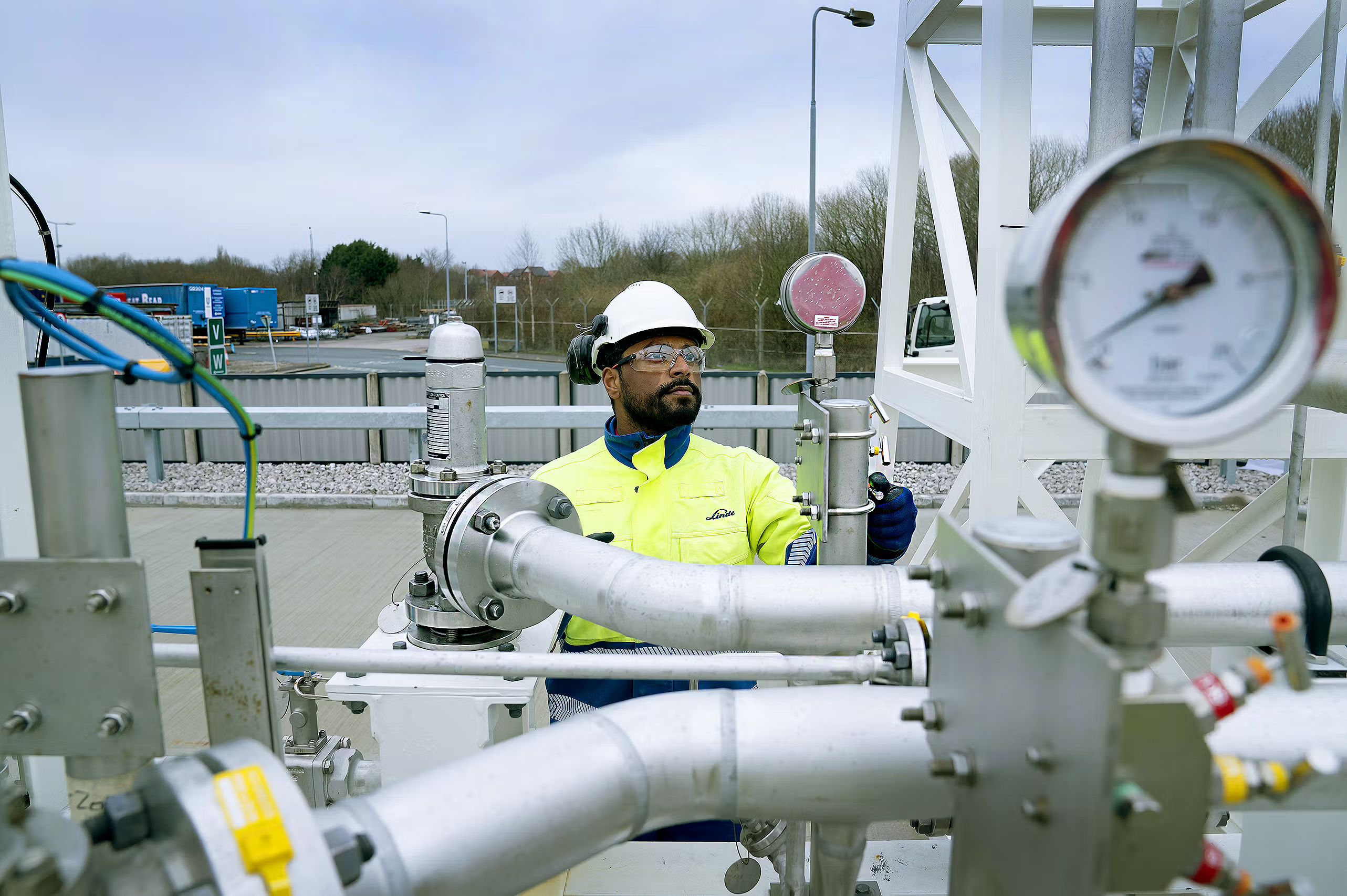
Portrait • Operational Site • Industrial Machinery
These are all professional photography assignments
They plainly do not present the same combination of hazards, access requirements, equipment or site controls.


Digital Forms • Standardisation • Relevance
Digital does not automatically mean proportionate.
Moving RAMS online can make documentation easier to create, store, update and share. That can be particularly valuable where organisations manage multiple workers, sites, projects and recurring higher-risk activities.
But digitising a process does not answer a more fundamental question: what information is actually necessary for this assignment?
A long generic checklist does not become more relevant simply because it appears on a screen rather than on paper.
For a photography commission, the useful starting point remains the work itself: what the photographer will do, what equipment will be used, what conditions exist at the location and what controls are genuinely required.
Heat • Equipment • Machinery
Detail matters when the environment becomes more complex


Insurance • Location Requirements • Procurement
Public Liability Insurance: necessary evidence, but not one universal number
Public Liability Insurance is routinely requested in professional photography commissioning, particularly where photographers enter client sites, venues, public locations or operational premises. It provides cover in relation to claims made against the insured by members of the public or other businesses, rather than claims by employees.
HSE’s guide to Employers’ Liability insurance distinguishes the two forms of cover: Employers’ Liability insurance is compulsory in circumstances covered by the legislation, while Public Liability Insurance is generally voluntary.
Voluntary does not mean irrelevant. A contract, location owner or commissioning organisation can legitimately require appropriate PLI as a condition of access or work. But current requirements also demonstrate why one figure should not automatically be treated as universal.
The Royal Parks currently asks for a minimum of £5 million for commercial filming and photography. Westminster City Council asks for at least £5 million per incident and £10 million for large-scale productions. Network Rail’s small-scale filming agreement requires a valid certificate with a minimum indemnity of £10 million.
Those examples do not establish what every photographer everywhere should carry. They establish something more useful: requirements vary with the organisation, location and activity.
Procurement already has a language for this: proportionality
In public procurement, the principle is explicit. Section 22 of the Procurement Act 2023 provides that conditions of participation must be a proportionate means of ensuring that suppliers have the legal and financial capacity, or technical ability, to perform the contract, having regard to the nature, complexity and cost of the contract.
This is a rule for procurement within the scope of the Act, not a legal test that can simply be transferred to every private photography booking. But the underlying management question is useful.
The Cabinet Office’s current Conditions of Participation guidance goes further on insurance. Where a particular level of insurance will be required, contracting authorities are encouraged first to consider whether that level is necessary.
The same language appears elsewhere in communications procurement. PRCA’s 2025 Pitch Forward report says preparatory work should be “proportionate to the size and scale of the budget at hand.”
And in public-sector agency procurement, Crown Commercial Service told the IPA that organisations should “minimise unnecessary complexities and do not waste agency time.” Again, that guidance is not about photographer RAMS. It demonstrates that proportionality is already recognised as a serious procurement principle rather than an argument for lower standards.
Time • Compliance • Necessary Information
Administrative burden has a cost too
The title of this Insight comes from UNP’s own experience of photography commissioning, not from an industry-wide time study. We have encountered relatively short assignments where the surrounding administration can approach a substantial proportion of the time spent actually photographing.
Forty minutes of administration for a sixty-minute shoot does not prove that forty minutes was unnecessary. A complex site may justify considerably more preparation than that. The useful question is whether each request materially helps the parties understand the work, verify competence, control risk or meet a genuine contractual requirement.
Administrative burden is not merely an irritation. Research by Ole Helby Petersen, Jesper Rosenberg Hansen and Kurt Houlberg examined learning and compliance costs experienced by Danish businesses dealing with government purchasing contracts. Their 2024 article in Public Administration found that these costs were strongly shaped by bureaucratic procedures and requirements.
That study is not about UK photographers and should not be presented as evidence that the same effects occur in photography commissioning. It is useful here for a narrower reason: it shows that compliance processes impose real learning and administrative costs on suppliers, and those costs deserve to be considered when systems are designed.
And what information genuinely needs to be collected?
A similar discipline applies to data. Where a RAMS or supplier process collects personal data, the Information Commissioner’s Office explains the UK GDPR data-minimisation principle as requiring personal information to be adequate, relevant and limited to what is necessary for the stated purpose.
That does not mean a long RAMS form is automatically a data-protection problem, nor that requesting insurance evidence is inappropriate. It means the organisation should be able to explain why the information it collects is needed.
More fields do not automatically create more assurance. Better information creates better assurance.
Practice • Process Design • UNP Picture Desk
We decided to test the idea on ourselves
It is easy to argue for proportionality when somebody else’s form is creating the work. The more useful test was whether UNP could apply the same principle to its own commissioning process.
We therefore built a photographer RAMS workflow around a deliberately simple proposition: verify stable information once and reassess what changes.
The process is not intended to replace a client’s own site procedures, specialist health and safety advice or a fuller assessment where an assignment genuinely requires one. It provides a structured starting point for photography commissioned through the UNP Picture Desk.

Photography Activity • Site Information • Review
What we changed
The form begins with the assignment rather than a catalogue of every hazard that might conceivably occur somewhere.
It then asks what the photographer is actually bringing or doing: handheld cameras, portable or mains-powered lighting, stands, backdrops, cables across a working area, a step-up or ladder, heavier equipment, vehicle access, drone work or another activity.
That is important because equipment can change the risk profile even when the location does not. A photographer working from a shoulder bag with one camera is not creating the same working footprint as a photographer installing several light stands and running power across a room.

The next questions deliberately acknowledge that the photographer may not possess every piece of site information at the time the form is completed.
Has an induction been advised or provided? Is mandatory PPE required? Have site-specific hazards been supplied? Are moving vehicles or machinery present?
Where appropriate, the answer can be “Not yet known.”
That is not a loophole. It identifies information that still needs to be confirmed. A forced yes-or-no answer can create the appearance of certainty where none exists. Recording an unknown makes the gap visible.

PLI • Declaration • Human Review
Human review remains in the process
Simplification does not mean removing accountability.
UNP still requires current Public Liability Insurance confirmation from photographers before commissioning them. The RAMS form records the insurer, policy reference, indemnity limit and expiry date, together with confirmation that a current certificate is available.
If current insurance evidence is already held by the Picture Desk, repeatedly uploading the same document does not make it more current. If it is not held or has expired, it needs to be supplied.
The photographer also confirms that the submitted information reflects the assignment as currently understood and should be reassessed if circumstances materially change.
Most importantly, submission is not automated approval. The information goes to the UNP Picture Desk for human review before a branded RAMS document is prepared for the commissioning client.


Relevance • Escalation • Professional Judgement
So what does proportionate photographer RAMS look like?
There cannot sensibly be one answer for every commission. Proportionate does not mean minimal. A high-risk industrial or infrastructure assignment may require extensive site information, specialist controls, inductions, permits, PPE and a detailed method statement.
Equally, complexity should not be manufactured simply to make a low-risk assignment look governed.
- Begin with the actual photographic activity. What is the photographer doing, carrying, installing or operating?
- Identify the environment. An office, public event, warehouse, construction site, laboratory, hospital, factory, railway environment or industrial plant can present very different conditions.
- Use site knowledge. The client or location should provide information about hazards and controls that cannot reasonably be known by the visiting photographer.
- Verify standing evidence efficiently. Current insurance or other stable supplier information should be checked, but unnecessary repetition does not improve its quality.
- Escalate where the risk escalates. More complex work should trigger more detailed assessment rather than forcing every routine assignment through the maximum process by default.
- Keep human judgement in the loop. Forms can structure information. They cannot understand every location, inconsistency or change of circumstance.
Photography • Communications • Procurement • Safety
What would a proportionate process look like to you?
Photographers see one side of this process. Communications teams, procurement teams, insurers, site managers and health and safety professionals see others.
Their responsibilities are not identical, and this Insight is not an argument for one group to transfer responsibility to another. It is an argument for better information to move between them.
The most useful process would not begin by asking how much paperwork can be collected. It would begin by asking what needs to be known for this photographer, this activity, this site and this assignment.
Health & Safety • Insurance • Procurement • Administrative Burden
Sources and further evidence
- Health and Safety Executive — Managing risks and risk assessment at work: steps needed to manage risk .
- Health and Safety Executive — Health and Safety in Construction (HSG150) . Includes HSE’s explanation of the role of method statements.
- Health and Safety Executive — Contractors and subcontractors . Guidance on information that site operators should provide to contractors.
- Health and Safety Executive — Site rules and induction .
- Health and Safety Executive — Employers’ Liability (Compulsory Insurance) Act 1969: a guide for employers . Includes the distinction between Employers’ Liability and Public Liability Insurance.
- The Royal Parks — Commercial filming and photography .
- Westminster City Council — Filming and photography: before you apply .
- Network Rail — Small-scale filming agreements .
- Procurement Act 2023 — Section 22, Conditions of participation .
- Cabinet Office — Guidance: Conditions of Participation , updated 17 August 2026.
- PRCA — Pitch Forward, 2025 follow-up .
- Institute of Practitioners in Advertising — Public-sector agency procurement best-practice guidance , 2025.
- Information Commissioner’s Office — Data minimisation .
- Petersen, O. H., Hansen, J. R. & Houlberg, K. — “The administrative burden of doing business with the government: Learning and compliance costs in Business-Government interactions” , Public Administration, 102(1), 188–206, 2024.
Editorial note: This Insight discusses professional practice, commissioning and proportionality. It is not legal, insurance or health and safety advice. Requirements differ between organisations, locations and assignments, and specialist or competent advice should be used where the circumstances require it.
Proportionality • Judgement • Safe Working
The paperwork should serve the assignment
Risk assessment is not the obstacle to professional photography. Good risk assessment helps make professional photography possible.
The problem arises when evidence of governance becomes confused with the volume of documentation produced. A form can be beautifully organised and still ask the wrong questions. A short assessment can be inadequate where the work is genuinely complex.
The useful standard is neither “less paperwork” nor “more paperwork”. It is relevant information, proportionate controls and professional judgement.
Verify what is stable. Reassess what changes. Ask the photographer about the photography. Ask the site about the site. Escalate the process when the actual work justifies it.
That is the principle UNP is now applying to its own Photographer RAMS process.