UNP Insight • Documentary Photographer UK • Reportage Photographer • Editorial Photographer
The Photographer Nobody Notices — Until the Pictures Arrive
The best compliment a photographer can receive is rarely, “Great pictures.” It is usually, “We forgot you were there.”
This Insight explores how United National Photographers supplies discreet documentary, reportage and editorial photographers for press, PR, corporate, charity, healthcare, event and broadcast assignments across the UK. Channel 4’s Britain’s Most Historic Towns provides the evidence: real locations, active production environments and a working method built on trust, judgement and quiet observation.

- Insight
- How discreet photographers work inside real assignments without altering the atmosphere they have been asked to record.
- Photographer types
- Documentary photographer, reportage photographer, editorial photographer, behind-the-scenes photographer, TV unit photographer and production stills photographer.
- Client sectors
- Broadcast, press, PR, corporate communications, healthcare, charity, public sector, events and workplace storytelling.
- Evidence
- Channel 4 production coverage across England, Scotland, Wales and Northern Ireland, delivered through the UNP Picture Desk.
- UNP role
- Photographer matching, editorial briefing, Picture Desk coordination, press-ready delivery, captioning and archive management.
- Related UNP services
- TV Stills Photographer • Press Photographer UK • PR Photographer • Corporate Photographer • Event Photographer
Why organisations commission photographers they hope nobody notices
Every day, communications professionals, PR agencies, television producers, NHS communications teams, charities, universities, public sector organisations and corporate marketing departments commission photographers to work inside real assignments. They may describe the role as a documentary photographer, reportage photographer, editorial photographer, TV unit photographer, production stills photographer or simply ask for someone who will not get in the way. The terminology changes from brief to brief. The underlying requirement rarely does.
Whether the assignment is a television production, a hospital visit, a charity campaign, a ministerial announcement, a corporate event, a factory tour, a workplace feature or a public engagement, the challenge is remarkably similar. People have gathered for a purpose that has nothing to do with photography. The photographer has been invited to document what happens, not influence it.
That distinction matters. The strongest editorial photographs rarely come from directing people or asking them to repeat a moment. They come from understanding how an assignment unfolds, anticipating what matters and working quietly enough for conversations, expressions and interactions to remain completely natural.
This Insight is not a general guide to documentary photography. It is evidence of a way of working. The photographs throughout this page were created during genuine assignments where broadcasters, communications teams and organisations trusted United National Photographers to work inside active environments while everyone else simply got on with the reason they were there.
Evidence, not promises: one production, countless unscripted moments
It is easy for any photography agency to describe itself as discreet, observational or unobtrusive. Those are familiar words throughout the industry. They appear on countless websites and in countless proposals. What is much harder is demonstrating what those qualities actually look like during a real assignment.
The photographs throughout this Insight were created while working alongside the production of Britain’s Most Historic Towns for Channel 4. Presented by Professor Alice Roberts, the series explored the history of towns and historic locations through archaeology, local contributors, reconstructed scenes, museums, heritage sites and expert interpretation.
For UNP, the assignment was not simply to photograph a presenter. It was to work inside an active television production. That meant understanding production movement, respecting camera positions, staying aware of sound recording, working around contributors and creating press-ready editorial images while filming continued naturally.
The gallery below is arranged as a visual essay about professional judgement. Belfast introduces trust. Chester introduces movement. Cheltenham introduces listening. York introduces public space. Cardiff introduces timing. Stirling introduces scale. Hadlow introduces adaptability. Buckland Abbey introduces restraint. Lincoln brings the whole discipline together.
Documentary archive
One production. Four nations. A consistent editorial approach.
Each group below shows a different working environment, but the method remains constant: observe first, photograph second and allow the people in front of the camera to remain focused on their own work.
The locations featured below also sit within UNP’s wider UK coverage network, connecting Belfast photographer coverage and Cardiff photographer coverage with nearby cities, towns and regional work supported through our nationwide coverage map, including Glasgow and Leeds.
Belfast • Craft • Heritage • Quiet Observation
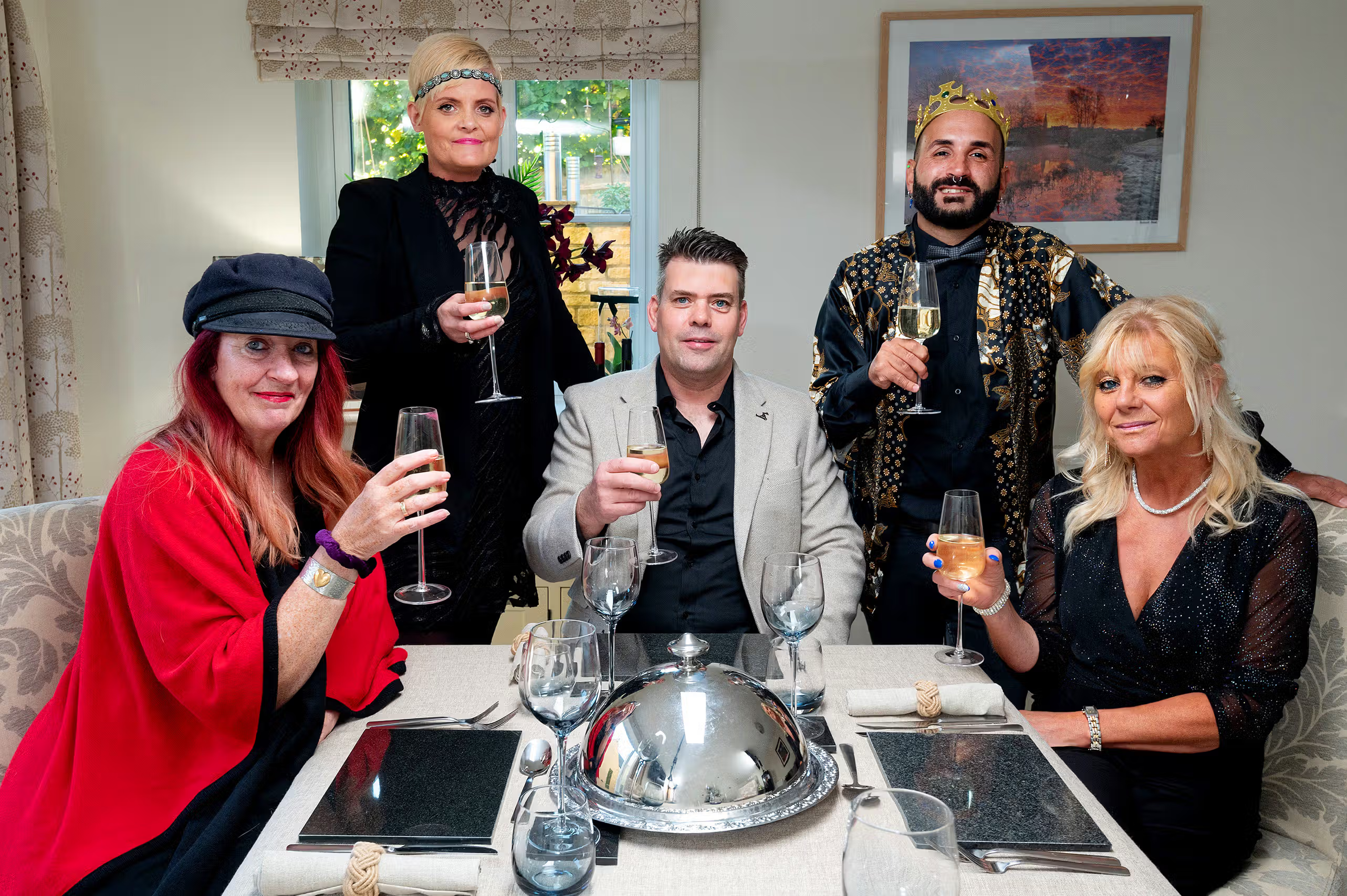
Belfast introduces the central discipline of the assignment: earning trust. In traditional interiors and intimate filming spaces, the photographer must read the room, understand where the production is moving and begin creating pictures without drawing attention.


Chester • Presenters • Historic Streets • Production Movement
Chester moves the story into public space. The photographer now has to work around presenters, camera operators, archaeology, historic streets, visitors and changing backgrounds while still producing images that feel calm and deliberate.


Cheltenham • Interviews • Listening • Quiet Conversation
Cheltenham slows the pace. In historic interiors and presenter-led conversations, the photographer must listen as much as watch. Expressions, gestures and exchanges often matter more than obvious action.


York • Public Space • Movement • Production Rhythm
York introduces crowds, public streets and larger movement. A photographer in this environment has to think two or three moments ahead, predicting where the presenter, crew and background will align.


Cardiff • Timing • Historical Interpretation • Editorial Context
Cardiff is about timing. The photographer is watching for the instant when presenter, contributor, crew and historical setting come together in a single frame that explains the production without needing to stage it.


Stirling • Scale • Anticipation • Production Confidence
Stirling is where experience becomes visible. Large historic locations, changing light, multiple production positions and presenter-led movement require anticipation rather than reaction.


Hadlow • Working Environments • Adaptability • Rural Filming
Hadlow proves that the method is not tied to one kind of assignment. The subject changes completely, but the discipline remains the same: observe carefully, respect the environment and let the scene unfold.


Buckland Abbey • Heritage • Restraint • Quiet Storytelling
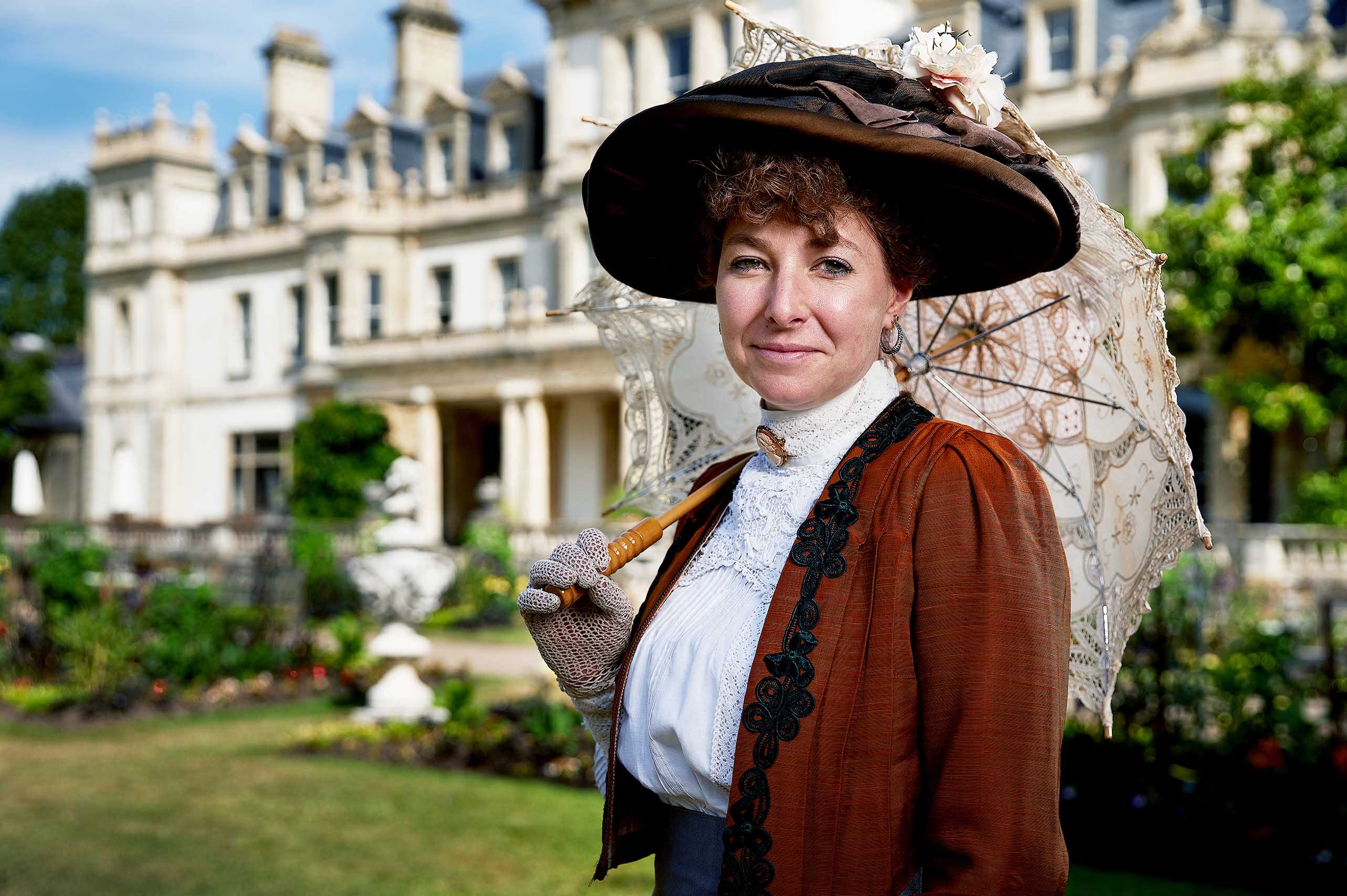
Buckland Abbey is about restraint. Historic interiors and heritage locations reward photographers who understand silence, patience and the importance of preserving atmosphere rather than imposing a frame.


Lincoln • Demonstrations • Crew Awareness • The Decisive Moment
Lincoln brings the full discipline together. Presenter, historian, camera operator, boom operator, public setting, historical demonstration and moving production all occupy the same space. The photographer has one job: tell the story without becoming part of it.


Why authenticity has become one of the most valuable visual assets
There was a time when many commissioned photographs were expected to look polished, carefully directed and unmistakably professional. Executives stood shoulder to shoulder, everyone looked towards the camera and every handshake was repeated until the composition felt perfect. Those photographs still have their place. Organisations continue to need portraits, formal presentations, award ceremonies and record photography.
But they are no longer enough on their own. Modern communications teams increasingly need photographs that feel authentic because nothing else will do. They want the meeting before the announcement, the expression between two contributors, the concentration of a production crew, the atmosphere inside a hospital screening, the natural exchange between staff and visitors, or the quiet moment that explains the whole assignment better than a staged photograph ever could.
Those moments cannot be recreated once they have passed. They exist for only a fraction of a second, and they disappear the moment people become aware that they are being photographed. The role of the photographer is therefore not simply to recognise the moment, but to allow it to happen naturally.
The difference between documentary, reportage and event photography
A documentary photographer may cover an event, but that does not automatically make the photographs documentary. Likewise, a PR photographer, corporate photographer, press photographer or TV unit photographer may work in a completely observational way. The distinction is not the assignment type. The distinction is the method.
Traditional event coverage often prioritises arrivals, groups, formal moments, speakers, branding and proof of attendance. Those images still matter. Many organisations need them. Documentary-style event coverage goes further. It records the conversation before the presentation, the concentration behind the scenes, the exchange between staff and visitors, the small gestures that explain what an organisation feels like from the inside.
That is why corporate clients increasingly search for documentary, reportage and editorial approaches rather than simply asking for event coverage. They want pictures that feel natural without becoming informal, professional without becoming stiff and useful across press releases, social media, internal communications, stakeholder reports, websites and archives.
Why discretion matters more than ever
Different organisations describe the requirement in different ways. A television producer may ask for a TV unit photographer or production stills photographer. A communications manager may brief an editorial photographer. A charity may simply ask for somebody who can work discreetly. NHS communications teams often need photographers who understand sensitive clinical environments, while corporate marketing departments increasingly talk about authentic workplace photography or visual storytelling.
The terminology changes, but the question is the same: can we trust this photographer to work alongside our people without changing the atmosphere we want them to photograph?
That question matters whether the assignment involves a television presenter, a Cabinet minister, NHS clinicians, charity volunteers, school pupils, senior executives, engineers on a construction site or families attending a community event. The camera may be the same. The environment is never the same.
For almost thirty years, United National Photographers has answered that question by matching the right photographer to the right assignment through the UNP Picture Desk. Technical ability is only part of the decision. Just as important is judgement, experience, awareness of the environment and the ability to work respectfully with people who have more important things to concentrate on than a photographer.
Where this approach is used today
Although the photographs throughout this Insight were created while supporting television production, the same professional judgement is applied every day across many different assignments. One week it may involve documenting a broadcaster on location. The next it could be a Royal visit, an NHS communications campaign, a chief executive meeting employees, a charity supporting vulnerable families, a ministerial announcement or engineers working inside a live manufacturing facility.
In healthcare photography, the photographer may need to work around patients, clinicians, safeguarding requirements and sensitive spaces. In public sector photography, they may need to document services, civic leadership or community projects without disrupting the people involved. In corporate photography, the brief may require authentic workplace images that show real people doing real work rather than recreating activity for the camera.
The same principles extend to PR photography, press photography, education photography, construction photography, industrial photography, retail photography and professional event photography. Every environment has its own pace, its own challenges and its own responsibilities, but the discipline remains unchanged: understand the brief, respect the people involved and create photographs that feel genuine because the assignment was never over-directed.
For larger commissions, the UNP Picture Desk applies exactly the same philosophy across multiple locations. Whether a project covers one city or the whole of the United Kingdom, photographers are carefully matched to the assignment, consistently briefed and supported through a central editorial workflow that has evolved over nearly three decades of national coverage.
Consistency is rarely achieved by one photographer alone
One photographer can produce outstanding work on one assignment. Delivering the same standard across dozens of locations, different clients and changing environments is a very different challenge. That is where a managed Picture Desk makes the difference.
The photographs featured in this Insight were created across different locations separated by hundreds of miles. Historic city centres, castles, museums, heritage attractions, public spaces and active filming locations all presented different logistical and editorial challenges. Yet viewed together, the pictures feel as though they belong to the same visual story.
That consistency is never accidental. It comes from careful briefing, selecting photographers whose experience matches the assignment, maintaining clear editorial standards and ensuring that every image contributes to the client’s wider communications objectives rather than simply documenting what happened.
Finding an available photographer is relatively easy. Finding the right photographer for a particular assignment is considerably harder. A royal visit, a television production, an NHS communications brief, a charity campaign or a major corporate announcement each require different experience, different interpersonal skills and different ways of working.
The photographer nobody notices
Nearly thirty years after United National Photographers was founded, the equipment has changed beyond recognition. Film has given way to digital. Newspapers now publish online first. Communications teams need images within minutes rather than days. Social media, internal communications, websites, annual reports and digital newsrooms all demand photographs that are technically excellent, quickly delivered and ready for immediate publication.
One thing, however, has remained remarkably consistent.
The most successful photographers are rarely the ones who dominate the room. They are the ones who understand it. They recognise when to step forward and, more importantly, when to step back. They appreciate that the people they are photographing already have a job to do, whether that means presenting a television programme, caring for patients, announcing a new investment, supporting a charity, welcoming a royal visitor or simply getting on with their working day.
That understanding cannot be learned from a camera manual. It comes from experience, judgement and the confidence to know that the photographer does not need to become part of the event in order to tell its story.
The photographs throughout this Insight were created in different places, under different conditions and within different working environments. Some were made in busy public spaces. Others inside historic buildings, active television sets or sensitive locations. Together, they demonstrate a professional approach that has remained consistent throughout almost three decades of assignments undertaken by United National Photographers.
The locations may change. The clients may change. The story always changes. The responsibility never does.
What clients are really commissioning
Clients often think they are commissioning photographs. In reality, they are commissioning judgement. They need someone who can arrive on time, understand the brief quickly, work respectfully with unfamiliar people, recognise usable moments, avoid operational problems, deliver technically clean files and produce images that editors, communications teams and stakeholders can use immediately.
On a television production, that may mean working around camera operators, sound recordists, presenters and contributors. In a hospital, it may mean understanding sensitive spaces and vulnerable people. At a corporate event, it may mean documenting authentic workplace culture without distracting senior leaders or staff. At a charity initiative, it may mean preserving emotion without exploiting it.
The strongest photographer on assignment understands that every commission carries responsibility. The camera grants access, but access must be earned through behaviour. That is why unobtrusive photographers, observational photographers and experienced editorial photographers are so valuable to modern communications teams. They do not simply make images. They protect the integrity of the moment while creating a visual record clients can trust.
For a documentary, editorial, television production or other observational photography brief, book a photographer or contact the UNP Picture Desk with the location, access requirements, people involved, intended image use and delivery deadline.
We are never the story. We are there to tell it.