UNP Archive Insight • Press Photography • PR Photography • Editorial Coverage
Press and PR Photographers: Editorial Standards in Practice
United National Photographers coordinates experienced press and PR photographers for editorial, media and communications assignments across the UK, managed through one central Picture Desk.
Through an assignment photographed for the Financial Times, this archive Insight examines why accuracy, context, availability and publication-ready delivery still matter in a fast-moving media environment.

- Publication
- Financial Times
- Feature
- “Robots from Estonia boost supermarket spirits during pandemic”
- Photographer
- Vicki Couchman, commissioned through UNP
- Subject
- Autonomous delivery robots operating outside a Co-op store
- UNP role
- Photographer commissioning, Picture Desk coordination and publication-ready delivery
- Related services
- Press photographer, PR photographer, corporate photographer and multi-location photographer
Publishers • Newsrooms • Agencies • Communications Teams
Press and PR photographers for national and international media
United National Photographers coordinates experienced press and PR photographers for publishers, agencies, brands and communications teams. These assignments often take place in editorial environments where accuracy, context, timing and visual clarity are essential.
A clear example is the Financial Times feature “Robots from Estonia boost supermarket spirits during pandemic”, illustrated with photographs made by Vicki Couchman, an independent photographer commissioned through UNP. The assignment placed a visible local scene within a wider international story about logistics, technology and changing patterns of delivery.
The strength of the photograph lies in the relationship between subject and setting. Autonomous delivery robots outside a Co-op store immediately establish what is happening and where. The image carries the factual core of the story without requiring decorative staging or an artificial reconstruction of events.
This is where an editorially experienced photographer adds value. The brief may arrive from a publication, agency or communications team, but the photographer must still recognise the clearest visual evidence, work within the available access and return a picture set that an editor can use confidently.
Accuracy • Context • Captions • Responsible Representation
Why editorial standards matter for press and PR photographers
A press or PR assignment is not simply about visual impact. Images intended for editorial and communications use need accurate context, useful captions and appropriate supporting information. Newsrooms and communications teams rely on photographers who understand how each frame contributes to the wider story.
The Financial Times describes ethical and professional standards as fundamental to its journalistic integrity. Its current Editorial Code sets out that wider commitment. For commissioned photography, the practical expression of those principles includes accurate identification, honest visual context and responsible treatment of the people, places and activity being photographed.
Press work also requires photographers to recognise moments with editorial value while working around real people, live environments, restricted access and changing circumstances. A strong frame should communicate the central fact of the story; its caption should then add the names, location and context that the image alone cannot provide.
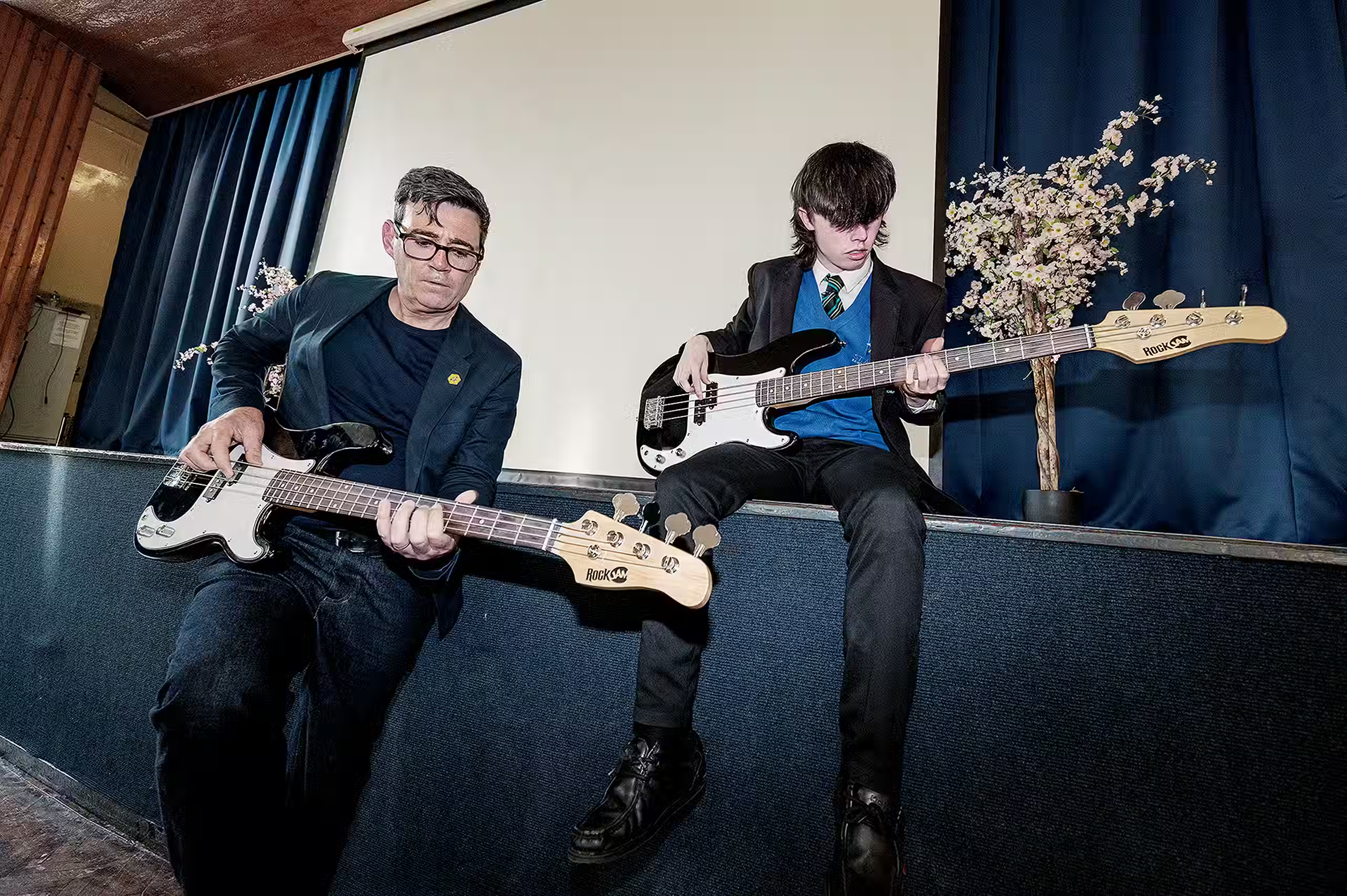
For further evidence from the UNP archive, see the Andy Burnham press photographer archive , which traces repeated editorial coverage across changing public roles, locations and news contexts.
UK-Wide Coverage • Local Knowledge • Central Coordination
Nationwide press and PR photographer commissioning
Availability is critical in modern public relations and editorial communications. Stories develop quickly, access windows can be short and publication deadlines are often fixed. UNP’s UK-wide network enables the Picture Desk to identify and coordinate an appropriate photographer for the location, timing and requirements of the brief.
Since 1997, UNP has developed a managed national network of independent photographers experienced in press, PR, corporate and public-facing environments, including assignments where timing, discretion, access and rapid delivery are important.
Availability alone is not enough. The photographer must be suited to the assignment, understand the intended use and have the professional judgement to work without constant direction on location. The Picture Desk therefore considers relevant experience as well as geography before confirming the commission.
The same model supports campaigns extending beyond one city or publishing requirement. UNP’s Glasgow PR photographer national campaign Insight provides a recent example of local photographic judgement working within a centrally coordinated communications brief.
Editorial Media • Corporate Newsrooms • Digital Channels • Archives
Press and PR photographers in a modern news environment
The role of press and PR photographers has evolved as distribution has expanded across publisher websites, corporate newsrooms, social platforms, internal communications and long-term digital archives. The destinations have multiplied, but the need for accurate, relevant and professionally usable imagery remains.
Press photography and PR photography are not identical. A press photographer may be working directly for a publication to document a developing story, while a PR photographer is usually commissioned to create imagery supporting a planned announcement, campaign or organisational message. In practice, both require factual awareness, professional conduct and an understanding of how editors assess an image.
A single assignment may now need landscape and portrait compositions, tight and wide frames, fast selects for media use, web-ready files and accurate information for future retrieval. The useful result is not simply one striking photograph, but a coherent set that can move between channels without losing the meaning of the story.
For a broader view of how press, PR, corporate, event and specialist roles overlap within current communications briefs, read UNP’s Insight on what UK communications teams need from professional photographers .
Whether supporting a national publication, corporate announcement, regional media story or time-sensitive campaign, the objective remains consistent: create useful images, identify them accurately and deliver them in a form that communications professionals can work with.
Briefing • Selection • Coordination • Press-Ready Delivery
How UNP commissions press and PR photographers
Assignments are coordinated through the UNP Picture Desk. The team receives and clarifies the brief, identifies an appropriately experienced photographer, confirms availability and practical requirements, coordinates timings and manages the route through to final image delivery.
The brief may include the story angle, people involved, location, access arrangements, must-have frames, branding requirements, intended media use and delivery deadline. Clear information at the beginning helps the photographer make better decisions when conditions change on location.
Where images are intended for editorial or communications use, delivery can include accurate captions, names, locations and relevant metadata. This helps editors, agencies and communications teams understand what each image shows and how it relates to the wider assignment.
For multi-location assignments, the same Picture Desk can coordinate photographers in different parts of the UK while the client retains one commissioning route, one approved brief and one operational point of contact.
The Financial Times robot assignment remains a compact example of this model in practice: a relevant local photographer, commissioned through a national Picture Desk, creating clear editorial evidence for a story with international readership.