London Photographers • Westminster • Whitehall • Press & PR
Downing Street Photographer: Petition Handovers, Access and Accreditation
United National Photographers (UNP) provides professional photographers in London for press, PR and public affairs assignments, including petition and report handovers around Westminster, Whitehall and Downing Street. The UNP Picture Desk coordinates the photographer, photographic brief, image priorities and finished delivery.
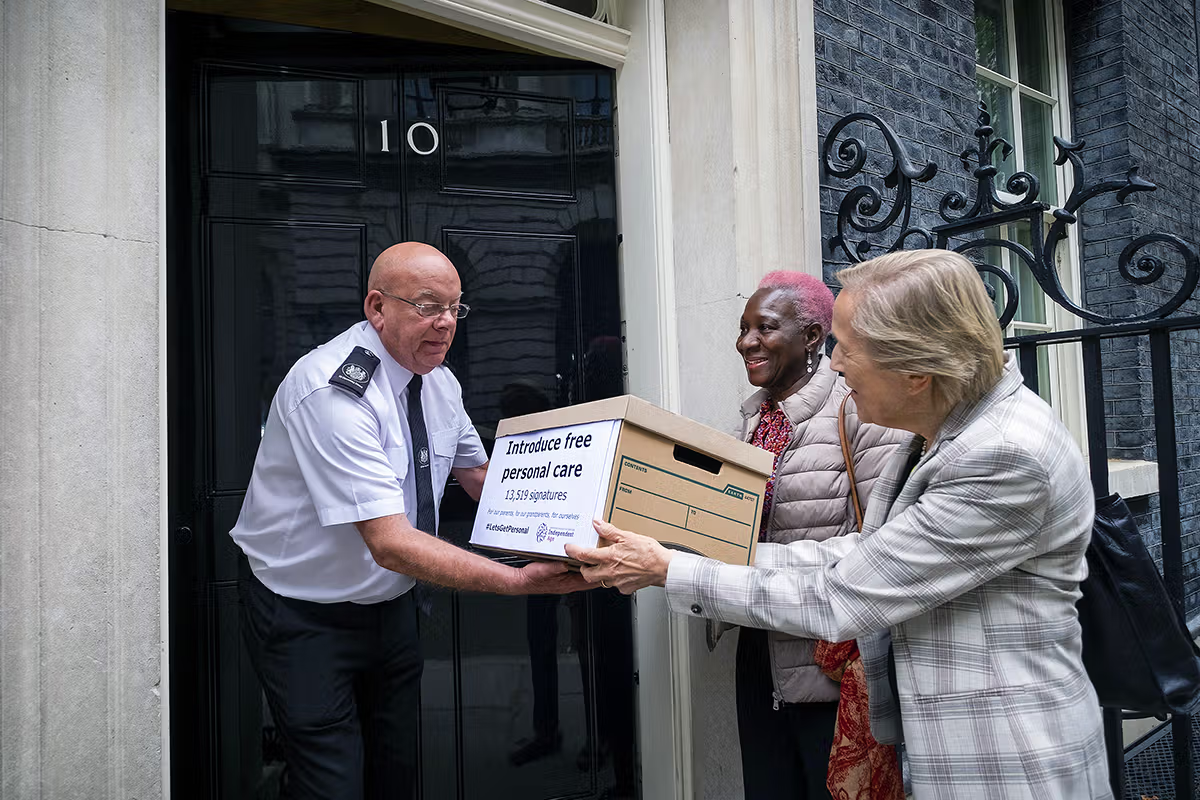
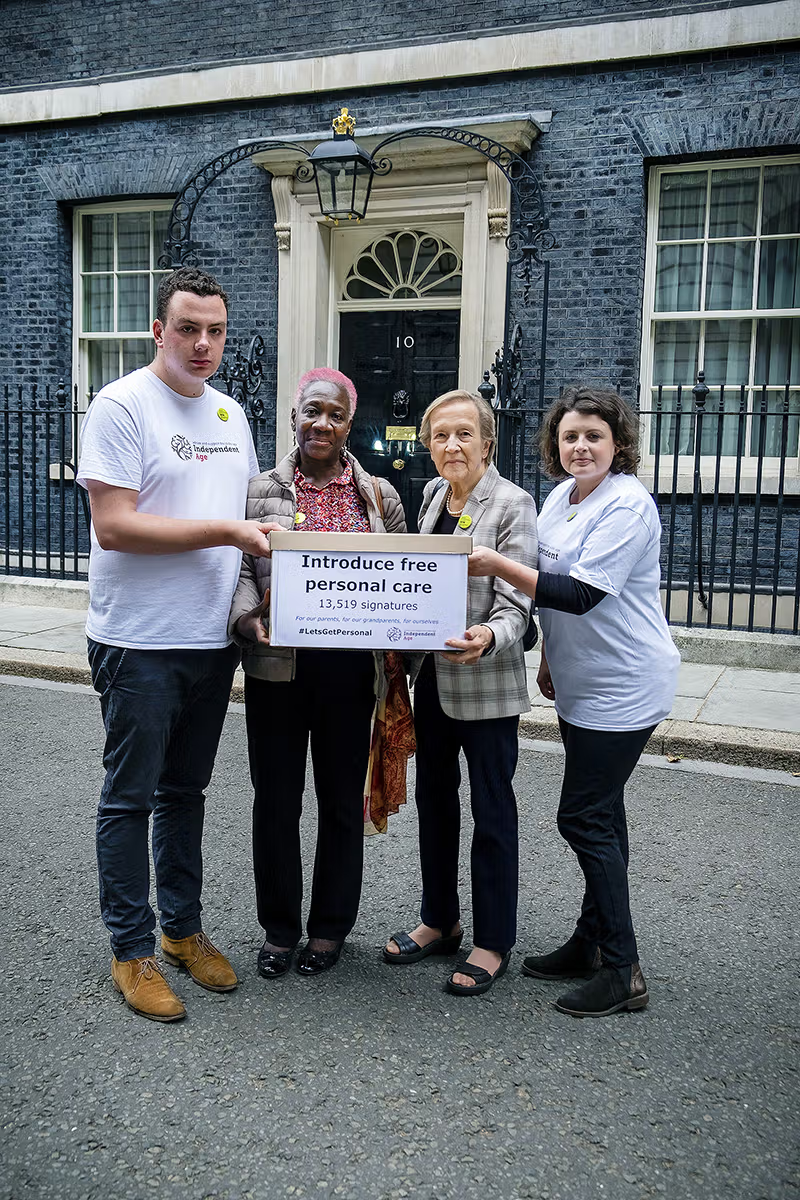
The opening photograph records the completed receipt of Independent Age’s petition at Number 10. But this is only the last decision in a wider professional brief: the people behind the campaign, the message, Westminster context, movement, individual portraits, portrait and landscape alternatives, and the handover itself. Access and photographic permissions must be confirmed separately from the photographer booking.

- Professional service
- Commission a London press, PR or public affairs photographer through the UNP Picture Desk.
- Principal locations
- Westminster, Whitehall, Parliament Square and Downing Street, subject to agreed access.
- Evidence
- Two historic, separate handover commissions: Common Seas (2023) and Independent Age (2019).
- Working deliverables
- People, message, location, arrival, presentation, portraits, details and horizontal/vertical alternatives.
- Restricted access
- Visitor arrangements, media permissions and photography authorisation need explicit confirmation.
- Commissioning route
- Book a photographer or discuss timing and access with the UNP Picture Desk.
A brief built around outcomes
What must a photographer record at a petition handover?
The photograph at the famous black door matters, but the organisation commissioning the photographer usually needs much more. For a press release, the essential image may be a clear group holding the petition. For supporters, the strongest image may be a portrait of the people behind the campaign. For a report, the signature count and actual handover may matter most.
A useful Westminster photographer prepares for several outcomes in the same brief: a recognisable setting, a readable message, accurate participant groups, a record of the presentation and alternative images that fit a website, press release, annual report or vertical social post.
The photographs below are not generic illustrations. They come from different commissioned assignments and demonstrate why a professional photographer plans a sequence rather than relying on one posed picture. The specialist assignment sits alongside UNP’s wider Westminster PR and public affairs photography evidence.
Published campaign • February 2023
Common Seas: the same petition, several photographic decisions
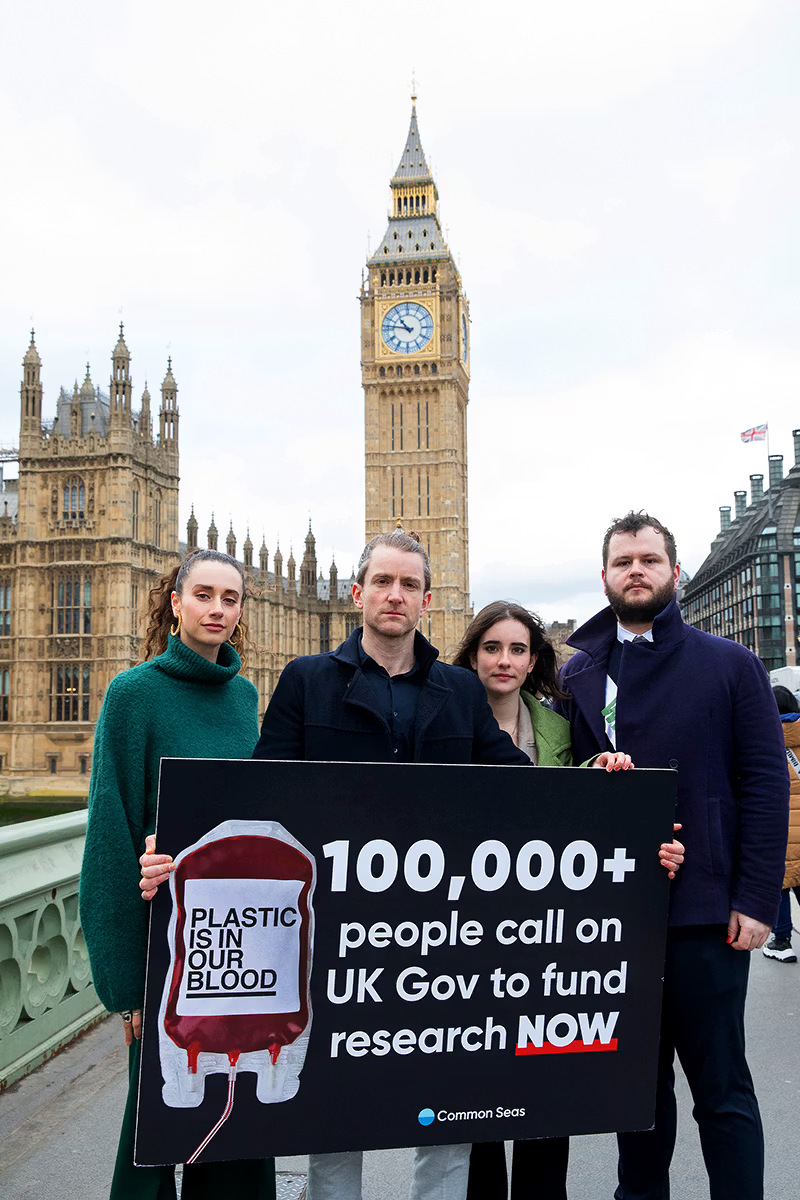
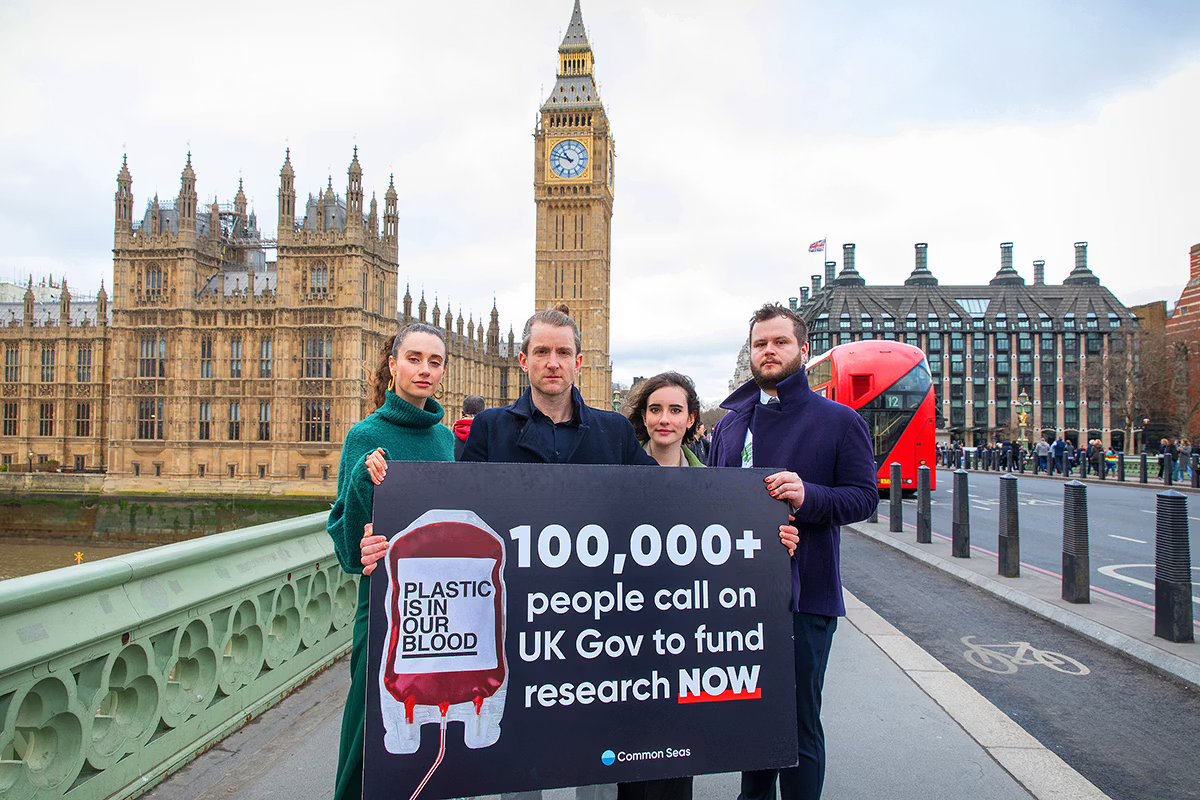
In February 2023, Common Seas and campaign partners brought their call for research into plastics in human blood to Westminster and 10 Downing Street. The organisation’s original petition explains the research demand. Common Seas also posted about the Downing Street delivery. The placards photographed by UNP state “100,000+”; that is the wording visible at the time, not a claim about the current signature counter on Change.org.
Five UNP photographs record the same campaign with different decisions. The Downing Street entrance demonstrates the location; a clean group frame records campaigners with their petition; Parliament and Elizabeth Tower put the issue in its public-affairs setting; both landscape and upright formats make the work useful to different media and communications channels.
Common Seas • UNP Assignment Evidence
Five photographic decisions from the Common Seas petition
Three upright photographs prioritise groups, message and recognisable Westminster context; two landscape alternatives provide wider spatial context. The set offers different usable outcomes from one assignment.



Published campaign • September 2019
Independent Age: photographing the participants and the actual handover
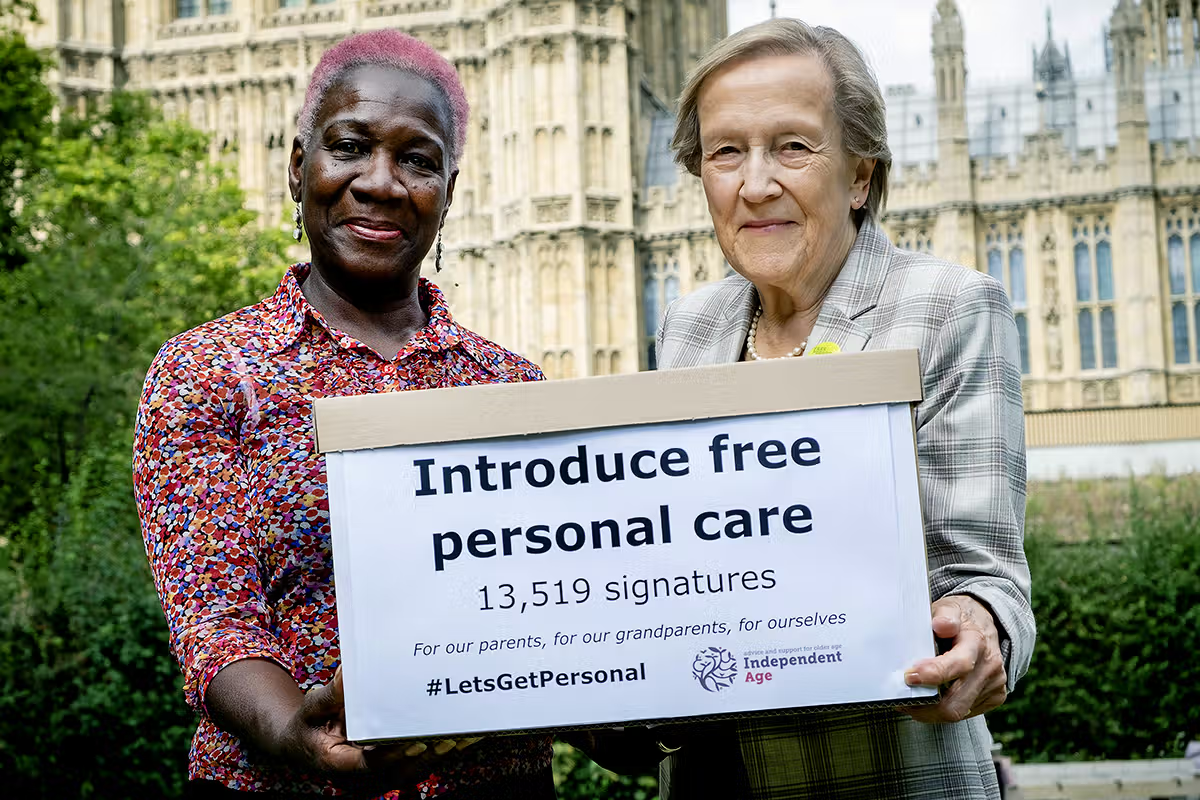
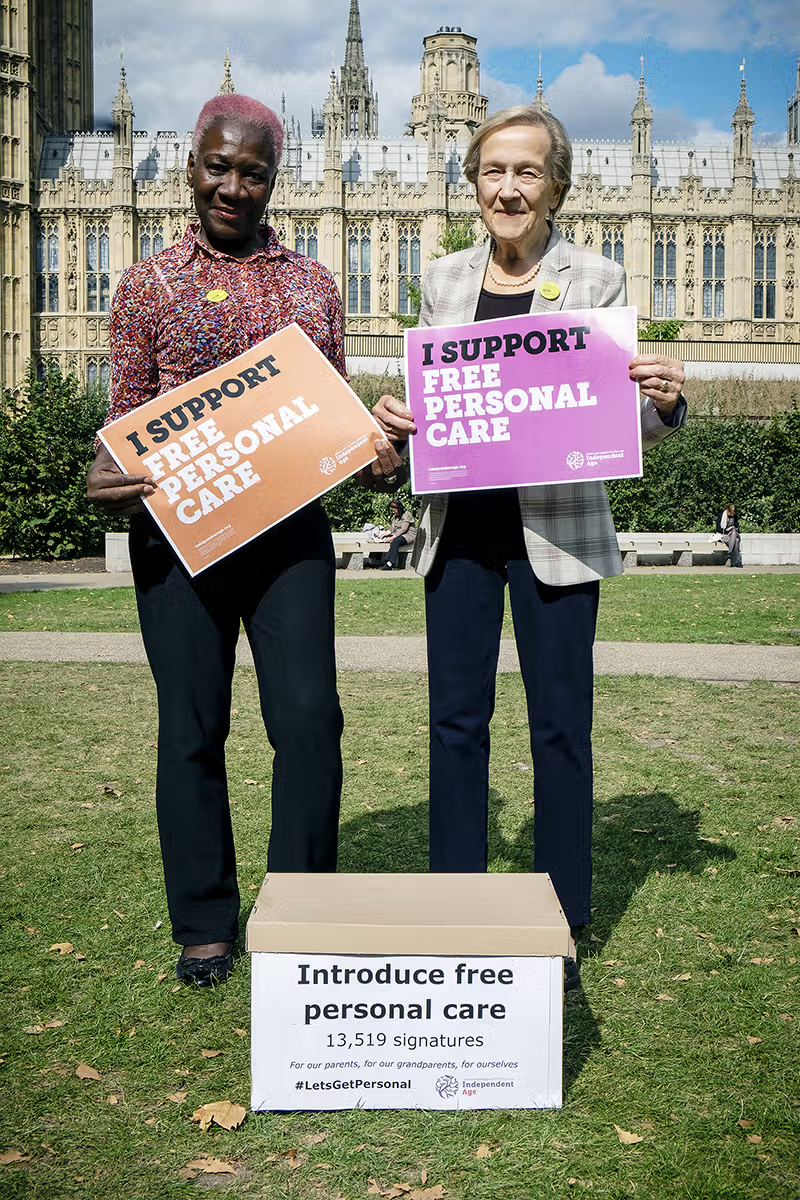
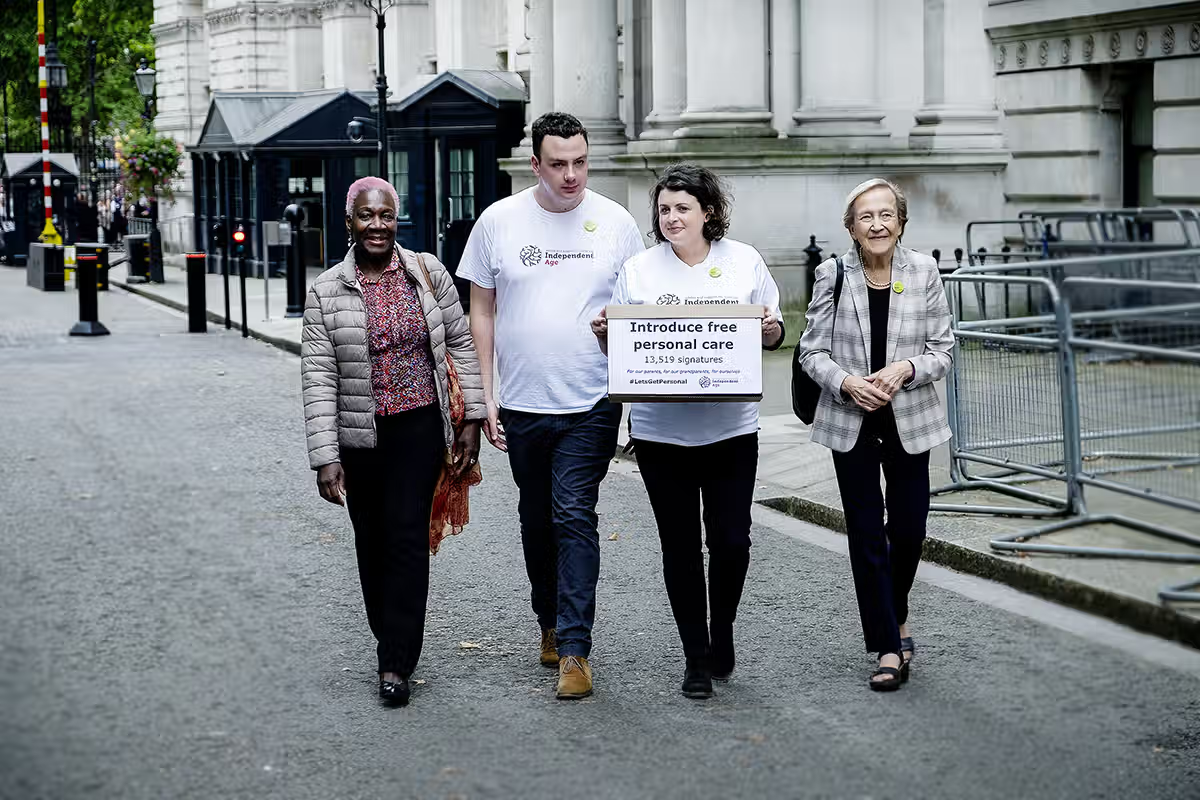
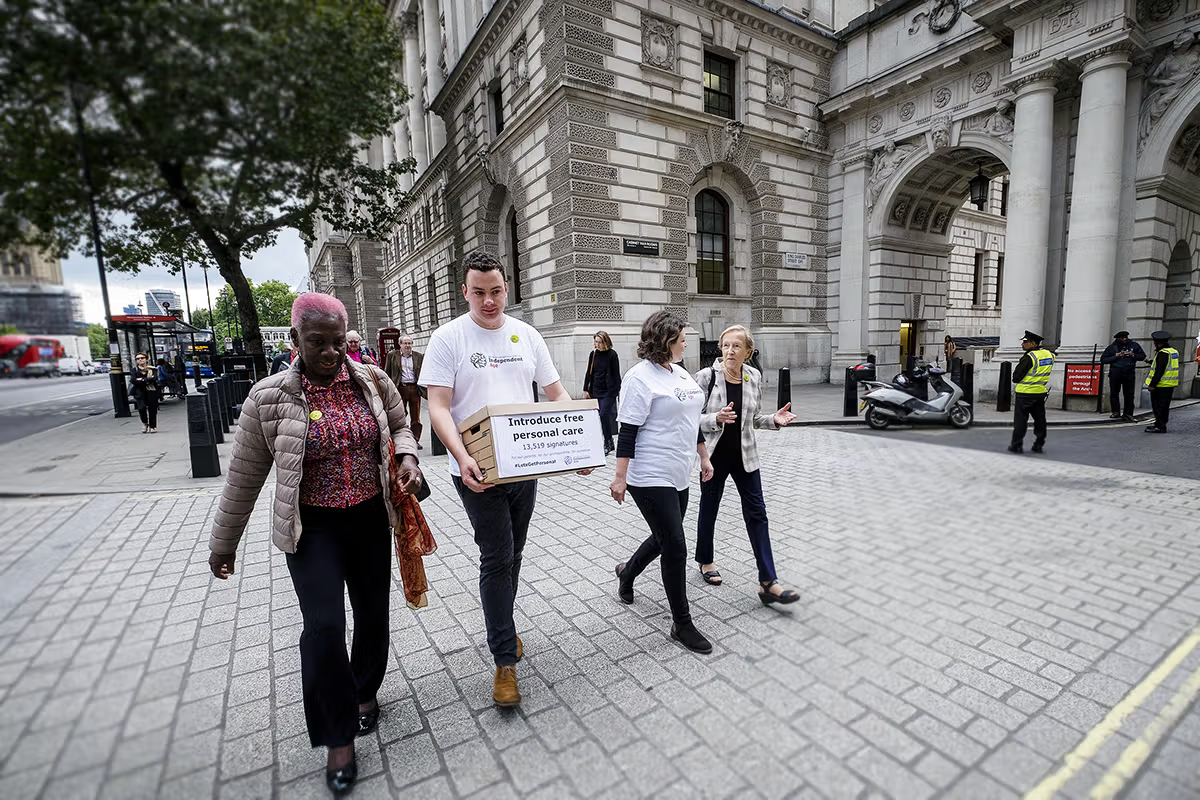
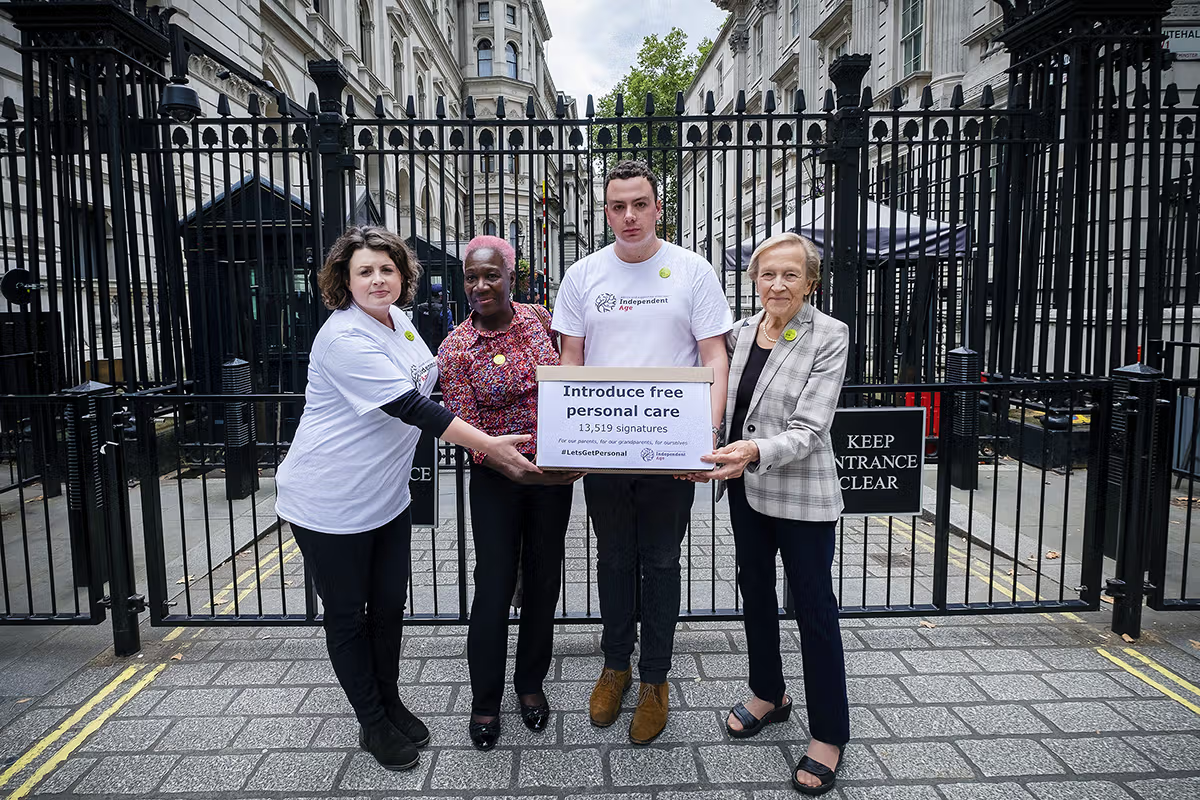
In September 2019, Independent Age presented a petition for free personal care at 10 Downing Street. Care Talk’s 11 September 2019 report documents the presentation, while Independent Age’s Support Matters, March 2020, describes the involvement of Patricia Phipps and Margaret Dangoor. The petition box in the UNP photographs states 13,519 signatures.
The editorial assignment required more than a photograph of campaigners at a famous door. UNP recorded the group, the legible petition, different versions of the entrance, the actual presentation and separate Westminster context for later press and organisational use.
Independent Age • UNP Assignment Evidence
Five images: from the gates to the presentation
The horizontal group and handover images give clear news and documentary choices. The upright group at Number 10 retains the complete doorway for vertical publishing.



Before the photographer travels
Access and accreditation: ask the question twice
The most consequential planning question is often administrative: who has confirmed that the commissioned photographer can enter and make the agreed photographs? Naming a photographer in correspondence, supplying identification or obtaining permission for campaign representatives to attend must not be assumed to establish the photographer’s own access or photography authorisation.
A UK Press Card identifies a professional newsgatherer but does not independently confer access privileges. Additional passes or permissions may be needed. The Cabinet Office directs enquiries about media access to Downing Street to the Number 10 press office. Exact requirements depend on the assignment and the relevant organisers and authorities; there is no single pass that UNP can promise will work for every visit.
For the final brief, confirm the named photographer, the specific areas and moments authorised for photography, and the person responsible for written confirmation. Also agree whether the photographer is joining the handover group, covering only external areas or working alongside other accredited press.
Timing • Route • Photographic variety
What a two- to three-hour Westminster photographer brief can cover
Where the schedule, weather, public-space conditions and access arrangements allow, a two- to three-hour commission can produce a varied, coherent Westminster image set. It is not a guarantee of every location or an entitlement to work inside a restricted area. The order should follow the organiser’s confirmed appointment and the real movement of participants, not a fixed sightseeing route.
- Before arrival — the picture desk and organiser agree the brief. Confirm names, permissions, exact appointment, meeting point, required groups, spokespeople, key message, deadline and any requested image uses.
- Arrival and first portraits. Record participants while the group is together; establish the petition or report clearly, including legible text, and secure at least one clean group photograph.
- The main presentation window. Prioritise the agreed handover moment, an unambiguous view of the document or petition, and any legitimate image of the receipt or completed presentation. This portion may last only moments and depends on authorisation.
- Alternative Westminster settings. If time and permissions permit, make separate images in the wider area: Parliament, architectural context, movement, campaign materials and the people involved. The landmark should support the story, not replace it.
- Portrait, detail and format options. Finish with usable individual portraits, human moments, wider context and both portrait and landscape alternatives; review any sensitive material and agree captions before delivery.
This creates the possibility of a working image library: press-ready group images, the core handover, portraits, documentary transitions, details and multiple crops. It cannot guarantee access, a particular shot or subsequent publication. It can make the authorised time much more productive.
Commissioning • Picture Desk
Commissioning a photographer for Downing Street, Westminster or Whitehall
UNP supplies professional London photographers for petition and report presentations, Westminster press calls, public affairs activity, Whitehall announcements, stakeholder communications and media-facing events. A single Picture Desk handles the brief, photographer matching, timing, editing and agreed delivery.
When you enquire, tell us the organisation, purpose of the photography, location, timetable, principal participants, access contact, essential images, intended uses and deadline. We can coordinate a suitable photographer and help make the brief practical; the organiser and the relevant authorities must confirm restricted-site access and permissions.
For related work, see our PR photographer service and the existing Westminster event and press-facing photography Insight.
The photographic working edit
Nineteen frames, nineteen choices: the working edit behind the lead image
The following sequence comes from the same Independent Age assignment. Frames 01–18 appear in five editorial groups below; frame 19 is the lead photograph at the top of the page. No photograph is repeated merely to fill a grid. Several return to the same people or doorway, but each changes the information recorded or the intended publishing use.
A commissioned photographer does not just accumulate images. The photographer makes decisions about who to include, how clearly the message reads, how much of Westminster to show, when the group is moving, when the petition changes hands, and which portrait or landscape version an editor might need later. The 19 frames show that decision-making from interviews to the final receipt.
Editorial edit • 01–05
1. Interviews and people before the handover
Documentary interaction and individual portraits make the campaign personal. They are editorial choices separate from photographing the petition box at Number 10.


Editorial edit • 06–09
2. Parliament establishes the wider public-affairs context
Different distances, groupings and portrait/landscape decisions allow an editor to choose whether to emphasise the petition, supporters or London setting.


Editorial edit • 10–14
3. Arrival, movement, gates and the front door
A handover does not begin and end with the official presentation. Movement and pre-handover groups help show the complete assignment; the doorway frames offer tighter choices.


Editorial edit • 15–17
4. A different grouping, an iconic detail and the changing moment
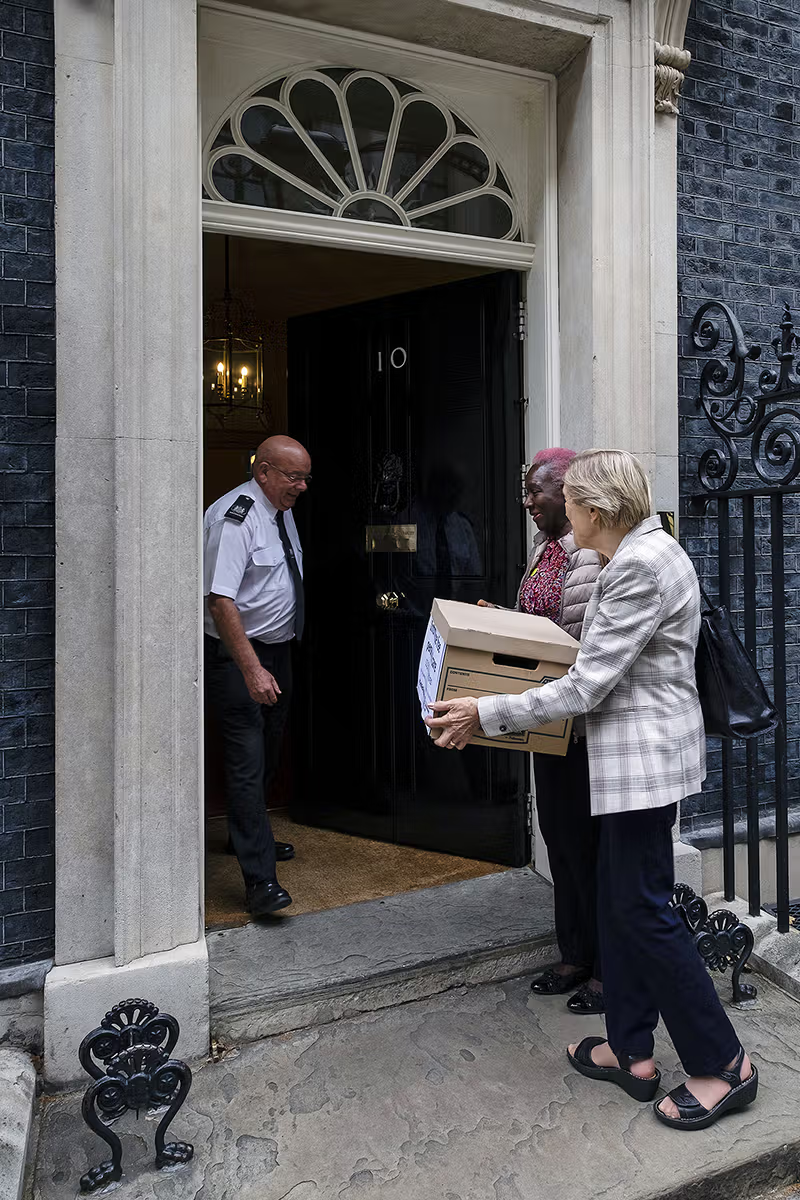
Closer and wider framings record different information. The open-door frame is part of the narrative of arrival and presentation, not an invitation to assume public access.


Editorial edit • 18–19
5. The transfer and completed receipt
Image 18 shows the action in progress. Image 19, used as the lead photograph at the top of the article, completes the visual sequence without repeating the image in the gallery.

Practical commissioning questions
Photographers, permissions and petition handovers
Answers to questions organisations should settle before confirming a Westminster photographer.
Can I book a professional photographer for 10 Downing Street?
Yes. UNP can arrange a photographer to cover an agreed Downing Street or Westminster brief. Restricted-area admission and any special photography permission must be separately confirmed with the organiser and responsible authorities.
Does a UK press card guarantee entry to Number 10?
No. A UK Press Card identifies a professional newsgatherer; it does not itself grant a right to enter a restricted building or event. Check event-specific media and visitor arrangements before the assignment.
Who confirms access or photographic accreditation?
The event organiser and relevant site or press authorities must confirm the requirements for the specific visit. Ask for explicit confirmation that the named photographer is authorised both to attend and to photograph the agreed activity.
Is two or three hours enough for Westminster coverage?
It can be enough for a useful range of portraits, petition images, location context and a scheduled handover when travel, timing and access work together. No supplier can guarantee every requested shot or site permission in a fixed window.
What photographs should a campaign team request?
Prioritise a readable petition or report, accurate participant groups, the intended presentation, a recognisable location, a few portraits, documentary transitions and both portrait and landscape versions. Agree how the images will be used before the shoot.
Can UNP supply edited, press-ready photographs quickly?
For suitable briefs, same-day image turnaround can be agreed with the UNP Picture Desk. The delivery deadline, selection size, captions and image-use requirements should be confirmed during commissioning.
The sources below corroborate the historic campaigns, document a separate credited UNP Westminster photograph, or explain general access requirements. They do not grant any future visitor or photographer access to Number 10.
Campaign records, published UNP evidence and access guidance
These sources document the original campaigns, publication context and general access principles. They should not be read as confirmation that any particular future photographer will be granted admission.
- Common Seas petition on Change.org — the primary text of the campaign seeking urgent research into plastics in human blood. The live signature count is not the same thing as the wording on a historical placard.
- Common Seas’ Downing Street handover post — a link supplied by the commissioning archive; social-platform availability may vary.
- Care Talk, 11 September 2019 — reporting on the Independent Age free personal care petition presentation.
- Independent Age, Support Matters, March 2020 — the campaigners’ own account, including Patricia Phipps and Margaret Dangoor and the Downing Street handover.
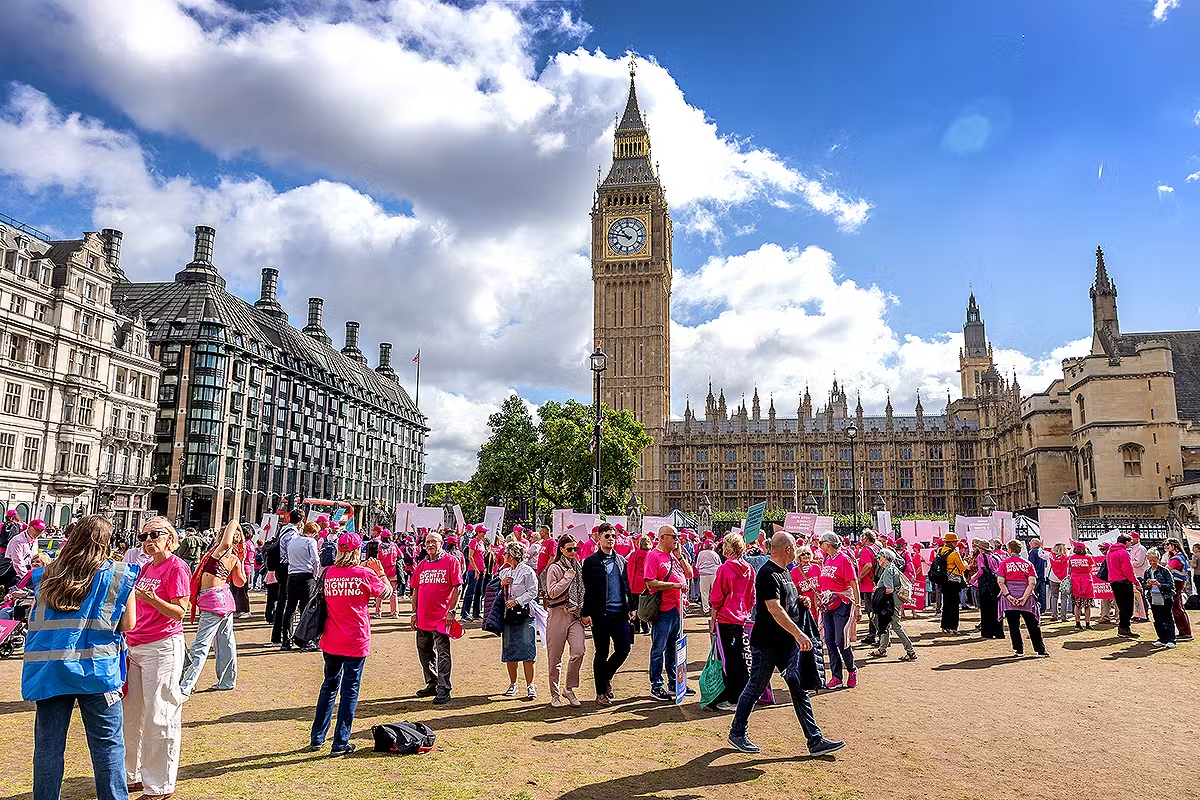
- Open Access Government, 4 March 2026 — an additional published-use example from a Dignity in Dying event in Westminster on 19 September 2025. The article credits photographer Tim Kavanagh; UNP confirms this is its photographic work. This is a separate Westminster assignment, not one of the historic Downing Street petition handovers.
- Professional Publishers Association — Press Cards — a UK press card identifies a newsgatherer but does not itself confer permission to enter a restricted site.
- Cabinet Office — Media enquiries — the official route identified for media-access questions concerning Number 10.
Related UNP reading: photography in public places, photography risk assessments, and image provenance and accountability.
Photographic judgement • Usable evidence
The difference between attending an event and delivering a complete photographic record
The lead photograph at the top captures the completed Independent Age petition handover; the working sequence shows how the photographer built towards that moment. A useful client delivery need not contain every exposure, but the brief should allow a publishable lead image, accurate participants, clear campaign messages, documentary transitions, portraits and appropriate alternatives.
That is the value of commissioning an experienced photographer rather than asking for a single image at the doorway. A concise assignment can produce a connected set of photographs when the professional brief, authorised access and editing decisions are considered together.
The service page establishes that UNP photographers are available in London. These photographs demonstrate the capability. The Insight explains the decisions behind them.