Conference Photographer UK • Corporate Events • Speakers • Delegates • Networking
Conference Photographer — What a Complete Corporate Event Record Looks Like
A conference photographer is not simply photographing the person at the lectern. A useful corporate event record connects the room, speakers, delegates, discussion, workshops, branding, networking, hospitality, awards and the small unscripted moments that explain what the event actually felt like.
This evidence-led UNP Insight draws on genuine commissioned conference photography across corporate leadership, engineering, manufacturing, professional membership, gala and awards programmes. The photographs show how a complete assignment becomes a practical visual record for communications teams rather than a collection of disconnected speaker pictures.
- Service
- Conference photographers for corporate, leadership, industry, membership and professional events.
- Coverage
- UK-wide assignments coordinated through the UNP Picture Desk.
- Typical programme
- Keynotes, panels, Q&A, delegates, workshops, networking, exhibitions, hospitality and awards.
- Commissioners
- Corporate communications teams, PR agencies, event organisers, professional bodies and in-house press offices.
- Delivery
- Edited, publication-ready photography with same-day priority selects available for appropriate briefs.
- Related UNP services
- Event Photographer • Corporate Photographer • PR Photographer • Multi-Location Photographer UK
Scale • Stage • Keynote • Audience
First establish the conference itself
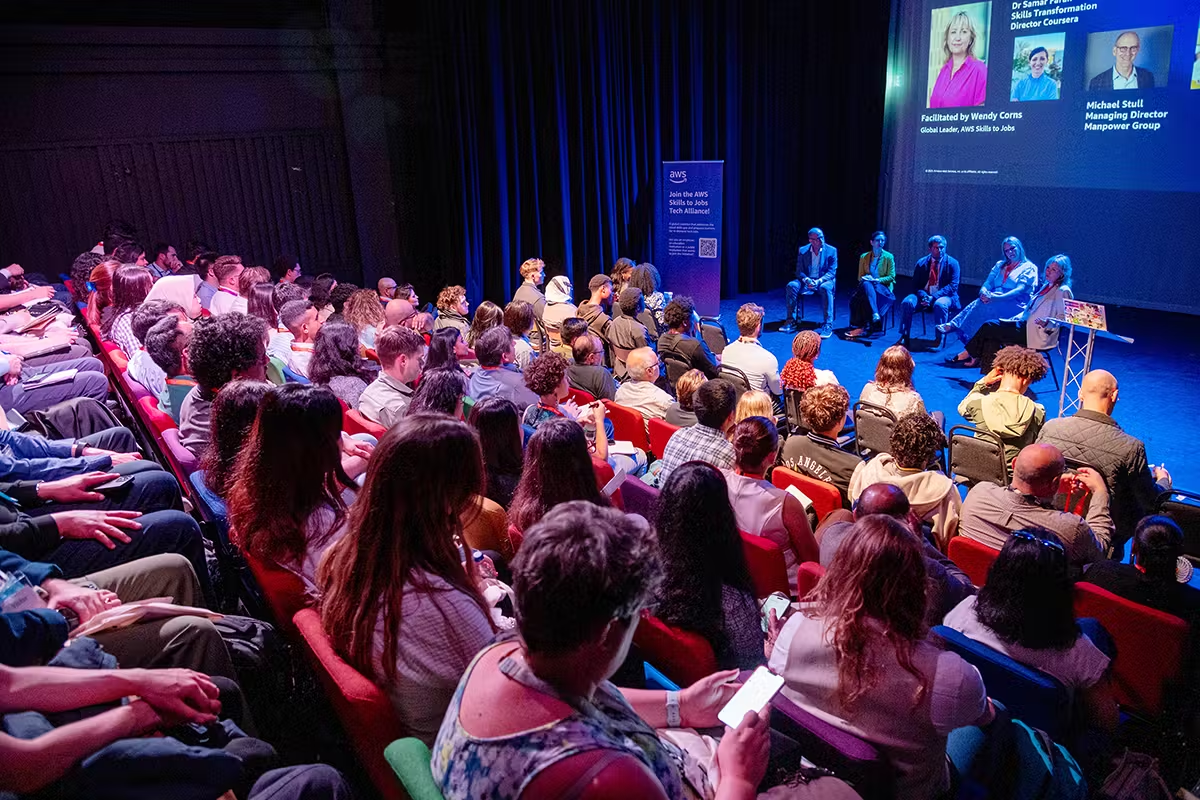
Before concentrating on individuals, the photography needs to establish where the event is happening and how the programme occupies the space. Stage design, screens, lighting, branding, audience scale and the relationship between speaker and room give the later close-ups their context.


Programme • People • Place • Communications
A conference is a sequence, not a collection of lectern photographs
The strongest conference photography explains both what happened and what it was like to be there. Keynote speakers, panels and presentations matter, but they are only one layer of the finished set. A professional conference photographer also needs to see the room before the programme begins, the audience concentrating, questions from the floor, applause, workshop participation, sponsor activity, networking, hospitality and the small visual details that make the event recognisable afterwards.
That breadth has a practical purpose. Photographs from the same conference may subsequently appear on a corporate website, LinkedIn, an intranet, speaker publicity, sponsor communications, a post-event report, annual reporting, recruitment material, PR activity and the organisation’s longer-term image library. A useful assignment therefore needs variety without losing visual consistency.
Conference photography sits inside UNP’s wider Event Photographer UK service. The event page remains the main commissioning route for live events generally; this Insight concentrates on the particular visual and operational demands of conferences and shows what a complete conference assignment can contain.
Expression • Gesture • Timing • Context
The person speaking matters. So does the way they speak.
Good speaker photography is about expression, gesture, timing and context, not simply obtaining a technically correct picture of somebody standing beside a screen. A useful conference edit moves between wider frames that connect the speaker to the event and tighter moments that preserve personality.
Panels introduce another challenge. The photograph needs to show an exchange between people rather than simply several people sitting in a row. Listening, disagreement, humour, gesture and the relationship between panellists can make the discussion legible even when the viewer cannot hear it.
Speakers • Panels • Discussion • Event Detail
Speakers, panels and live discussion
Speaker coverage sits inside a wider event record: presentations, discussion, networking, audience detail, branded environments and the visual punctuation that lets communications teams build a coherent story rather than a folder of near-identical podium photographs.


Delegates • Reaction • Networking • Stakeholders
The audience is half the conference
Listening, questioning, thinking, taking notes, laughing and talking afterwards are evidence that the programme reached real people. Audience photography is therefore not filler between keynote pictures. It records participation.
Breaks change the photographer’s rhythm again. Delegates stop facing a stage and start talking to each other. Clients meet suppliers, colleagues exchange ideas, leadership teams talk informally with staff and conversations begun in the auditorium continue over coffee. Those exchanges may be commercially or organisationally as important as anything that happened under the stage lights.
Delegates • Audience Reaction • Networking • Breakouts
People between the sessions
Audience concentration, questions, applause, workshop activity and informal conversations give the finished conference photography its humanity and show how delegates actually experienced the programme.


Workshops • Detail • Atmosphere • Participation
A complete set needs the things that happened around the agenda
Details and unscripted moments turn coverage into a visual story. Event graphics, printed material, screens, notes, workshop outputs, branded environments, expressions and unexpected interactions help communications teams reconstruct an event later — on a website, in a report, across social channels or inside an organisation’s archive.
Modern conferences also move rapidly between formats. A keynote can become a workshop; a workshop can become voting; a discussion may connect several locations by video. The photographer needs to follow those changes rather than remain fixed beside the stage.
Workshops • Collaboration • Branding • Atmosphere
The complete event story beyond the main stage
The closing part of the general UNP conference archive brings together workshops, collaborative activity, speaker portraits, delegate reaction, networking and event detail — evidence that a conference photographer is following the working programme rather than merely waiting for the next person to reach the lectern.


Real Assignments • Different Programmes • Different Rhythms
Different conferences produce different photographic jobs
A leadership programme, an engineering conference and a formal conference-and-awards evening cannot be photographed as though they are the same event with different logos. The brief, participants, venue and running order determine where the photographer needs to be and what kind of visual evidence will be useful afterwards.
The three complete sequences below are deliberately shown in their commissioned order. Repeated subjects and changes between landscape and portrait format are part of the evidence: the photographer is building a usable set for multiple communications needs rather than searching for one hero image and stopping.
Assignment Evidence • BOC / Linde • Leadership Conference
BOC / Linde — when a leadership conference moves from presentation into participation
The BOC / Linde Leadership Conference demonstrates a corporate conference brief that could not be covered by staying beside the stage. The programme moves through presentations, audience questions, facilitation, interactive exercises, voting, team-building and recognition.
For an internal leadership or employee conference, participation can be as important photographically as the speakers themselves. It shows how people engaged with the programme, how teams worked together and where the energy of the event actually sat.
Leadership • Facilitation • Questions • Teamwork • Recognition
BOC / Linde leadership conference — complete 20-image sequence
Twenty commissioned frames retained in their original sequence, moving from leadership-development detail and room context through questions, audience reaction, team activity and recognition.


Assignment Evidence • DHL • Birmingham
DHL — conference photography that retains the engineering and manufacturing context
DHL’s Regional Engineering & Manufacturing Conference in Birmingham shows why a conference photographer should preserve the subject of the event as well as the fact that an event took place. Sector displays, construction, government and defence themes, aerospace material, speakers, delegates, panels and networking all contribute to the finished communications record.
This is a working business environment. The photography needs establishing views and clean presentation frames, but it also benefits from quiet listening moments, coffee-break conversations, catered lunch, exhibition material and small branded details that make the event specific rather than generic.
Engineering • Manufacturing • Speakers • Delegates • Networking
DHL Regional Engineering & Manufacturing Conference — complete 20-image sequence
The complete sequence retains event identity, specialist sector context, speakers, listening delegates, networking, hospitality and the details that explain what the Birmingham conference was about.


Assignment Evidence • Royal Air Forces Association • Wyboston
Annual conference, gala dinner and awards — one event, several photographic rhythms
An annual conference can continue long after the final daytime presentation. The Royal Air Forces Association programme at Wyboston moves through venue and event detail, delegate conversation, reception, formal dinner, after-dinner speaking, awards, applause, winner portraits and charity activity.
The transition matters photographically. A formal presentation needs a clear record of recipient, presenter and award; audience reaction provides context; the gala room establishes scale and atmosphere; and trophies, certificates, flags and table settings make the final archive specific to the occasion.
Reception • Gala • Awards • Recognition • Charity
Royal Air Forces Association annual conference, gala and awards — complete 20-image sequence
Twenty photographs retain the full rhythm of the assignment, from venue detail and reception through dinner, speeches, formal awards, audience response, winners and the closing charity element.


Hospitality • Catering • Delegate Experience
There is no conference without…
Coffee. Lunch. Something sweet. And quite possibly a biscuit at precisely the right moment.
Hospitality is not usually why somebody commissions the photographer, but it is part of how delegates experience the day. Food, drink and service details also provide useful visual punctuation between rooms full of speakers and people concentrating very seriously.
So these stay together: fifteen little reminders that even the most ambitious corporate conference runs partly on ideas, partly on conversation — and partly on catering.
Coffee • Lunch • Reception • Dinner • Networking
The supporting cast — all 15 hospitality photographs
A compact conference hospitality sequence showing buffet details, informal meals, delegates eating and talking, formal dinner food and the small visual changes of pace that complete the event record.


Event • Corporate • PR • Press
Conference photographer, event photographer or corporate photographer?
A conference photographer is a specialist event photographer working around a structured business, professional, membership or organisational programme. The distinction is useful because a conference often combines several photographic jobs in one day: speaker coverage, documentary observation, corporate communications, portraits, networking and sometimes PR or press requirements.
UNP’s Event Photographer UK service covers the wider live-event requirement. Corporate Photographer UK becomes relevant where the brief extends into leadership, workplace or broader business imagery. PR Photographer UK applies where the event is built around a publicity story, while Press Photographer UK provides the editorial route for live media requirements.
The practical question is therefore not simply what the event is called. It is what the photographs need to achieve afterwards.
Picture Desk • Multi-Room • Multi-Day • UK-Wide
The photographer follows the conference. The Picture Desk keeps the commission joined up.
One room can often be covered by one experienced photographer. Simultaneous stages, breakout rooms, VIP sessions, exhibitions or repeated dates may need a coordinated team. UNP’s central Picture Desk holds the master brief, schedule, contacts, priorities, access requirements and delivery plan while photographers concentrate on the live programme.
That model is particularly useful because conference schedules move. A keynote can overrun into a workshop. A speaker may become available earlier than expected. Two breakout rooms can suddenly matter at the same time. A sponsor image may become urgent while the main stage remains live.
For roadshows, repeated programmes and conferences across several cities, see Multi-Location Photographer UK. The UNP coverage map shows the wider national photographer network coordinated through the same Picture Desk.
Delivery • Captions • Metadata • Communications Assets
Conference photographs have a second life after the room empties
The value of the assignment is not simply the number of photographs delivered. It is whether the finished set can be found, understood and used. Depending on the brief, conference photography can support same-day social activity, speaker and stakeholder communications, post-event reports, websites, intranets, PR, media relations, sponsor updates, recruitment and the organisation’s future archive.
Where rapid use matters, priority selects can be planned around the running order. The full edit can then follow with consistent file structure and, where required, names, roles, session information, location and other useful metadata.
This longer-term value is closely connected to the provenance and management of professional photography. UNP explores that subject in Image Provenance and Professional Photographers in 2026.
Programme • People • Priorities • Outputs
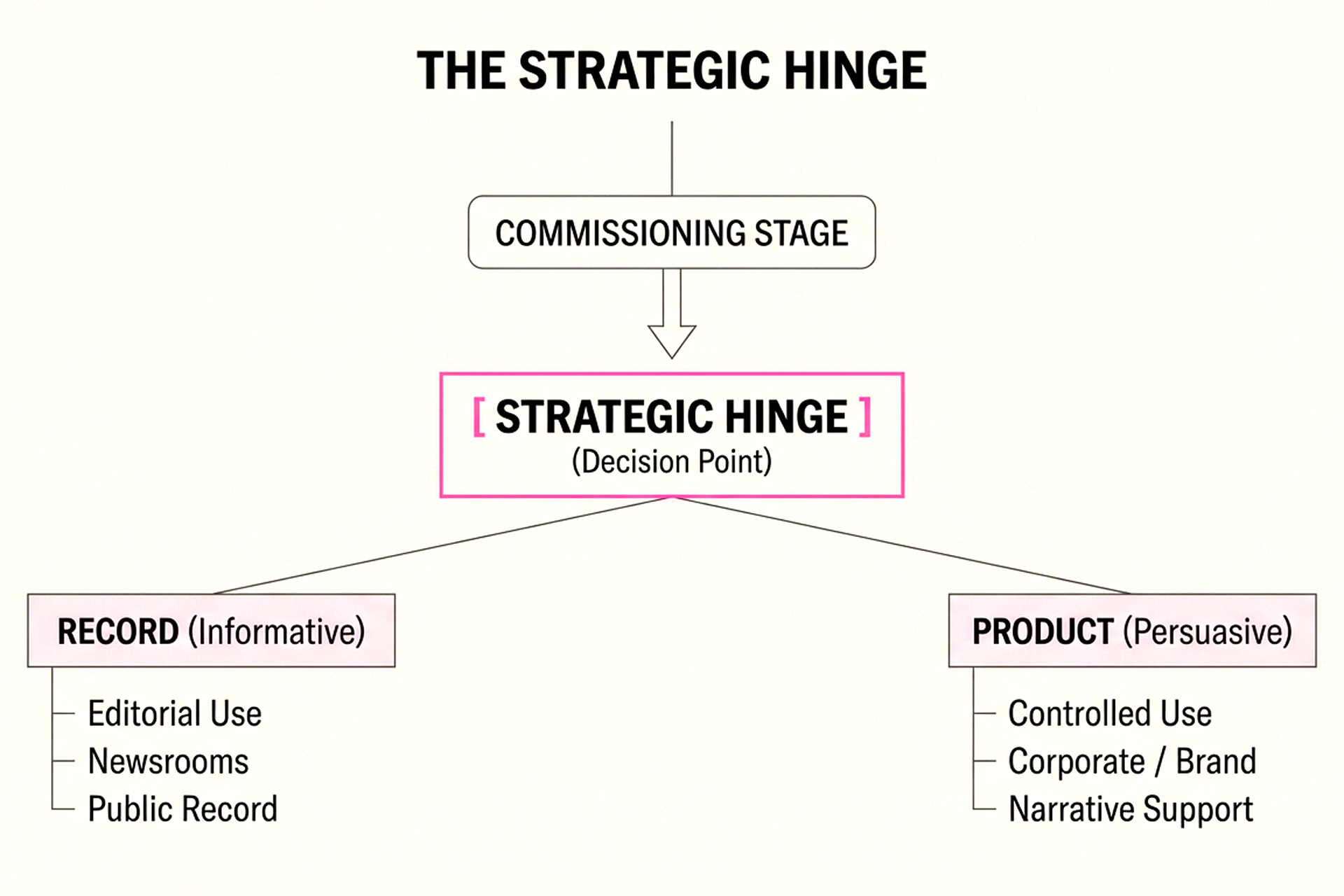
How to brief a conference photographer
A useful conference photography brief gives the photographer priorities and context without trying to predict every worthwhile photograph. The running order supplies the structure; experience and observation supply the moments that were never written into it.
- Programme
- Latest running order, important transitions, simultaneous sessions, breaks and evening programme.
- Rooms & access
- Venue plan, breakout rooms, restricted areas, access arrangements and any no-photography instructions.
- People
- Priority speakers, leadership, VIPs, sponsors, stakeholders, award recipients and important attendee groups.
- Must-have moments
- Operationally essential photographs that cannot be left to chance.
- Image use
- Press, PR, website, social, internal communications, annual reporting, sponsors or other intended channels.
- Delivery
- Same-day selects, full-edit deadline, captions, metadata, file structure and required landscape or independently composed portrait-format images.
Commissioning Questions
Conference photographer — frequently asked questions
Practical questions that affect the brief, photographer choice and finished delivery.
What does a conference photographer normally cover?
A complete brief may include venue and room views, event branding, keynote speakers, presentations, panels, Q&A, delegates, audience reaction, workshops, breakout sessions, networking, sponsor activity, exhibitions, hospitality, awards and supporting details. The exact mix should follow the programme and intended image use.
How many photographers does a conference need?
A single-room programme can often be handled by one experienced photographer. Simultaneous stages, several breakout rooms, separate VIP activity, exhibition areas or overlapping evening programmes may need two or more photographers. UNP’s Picture Desk can plan coverage against the running order rather than relying on one person to be in two places at once.
Can UNP provide same-day conference photographs?
Same-day highlight sets are possible for many briefs when agreed in advance. Timing depends on the programme, image volume, caption requirements and delivery method. Priority moments can be identified before the event so the photographer and Picture Desk know what needs to move first.
Can UNP cover multiple rooms, venues or cities?
Yes. UNP can coordinate photographers across simultaneous rooms, separate venues, repeated dates and multi-city programmes. The client retains one central Picture Desk while photographers work to the same master brief and delivery requirements.
Do conference photographers also cover networking, awards and hospitality?
Yes, where those elements form part of the brief. In many corporate conferences the conversations between sessions, gala dinner, recognition programme, catering and informal delegate interaction are important parts of the communications record rather than optional extras.
What should we send before the conference?
Send the latest running order, venue and room information, key contacts, priority speakers and stakeholders, sponsor requirements, access restrictions, no-photo instructions, intended uses, delivery deadlines and any photographs that are operationally essential.
How are conference photography usage rights handled?
Usage should be agreed with the commission because internal communications, PR, editorial, social, sponsor use, advertising and paid media can have different requirements. Tell the Picture Desk how the images are expected to be used so the appropriate terms can be confirmed before the event.
UK-Wide • Local Photographers • National Coordination
Conference photographers across the UK
UNP coordinates conference and corporate event photographers across London, Manchester, Birmingham, Leeds, Bristol, Glasgow, Edinburgh, Cardiff, Belfast and regional locations throughout the UK. The central Picture Desk provides one commissioning route while the photographer or team is selected around the venue and brief.
That structure is particularly useful for organisations running repeated leadership days, regional conferences, awards programmes or national roadshows. Local coverage reduces unnecessary travel while central briefing keeps standards, file handling and delivery joined up.
Commissioning • UNP Picture Desk
Commissioning a conference photographer through UNP
UNP supplies conference photographers for corporate conferences, leadership programmes, annual meetings, professional and membership events, engineering and industry conferences, panels, workshops, exhibitions, awards, hospitality and multi-room business programmes across the UK.
Send the UNP Picture Desk the date, venue, current running order, approximate hours, number of rooms, priority speakers or stakeholders, intended image use and any same-day delivery requirement. If the programme is still changing, the latest working version is enough to begin planning.
For conferences involving simultaneous sessions or several cities, the Picture Desk can advise whether one photographer is sufficient or whether the assignment would benefit from coordinated multi-location photography or additional photographers working to the same brief.
The aim is straightforward: when the final delegate leaves and the stage lights go down, the organisation should have more than proof that the conference happened. It should have a visual record capable of continuing the communications work afterwards.