UNP Insight • Charity Photography • British Red Cross • UK-Wide Archive
Charity Photographer UK: British Red Cross Campaigns and Community Stories
What makes a photograph useful to a charity? UNP’s British Red Cross archive provides a practical answer. Across fundraising, volunteering, public events, community stories, stakeholder visits and conferences, the strongest photographs do more than identify an organisation. They establish who was there, what was happening and why the activity mattered.
The assignments shown here were photographed in different places and for different communications purposes. Together they demonstrate how people, activity, organisational identity and location can remain visible without turning every frame into the same corporate picture.
- Organisation
- British Red Cross
- Evidence shown
- Fundraising, volunteers, public events, community stories, stakeholder visits and conference photography
- Locations represented
- Liverpool, London, Southampton, Norwich, Camborne, Corby and Ballymena
- Communications contexts
- Fundraising, PR, partnerships, regional media, stakeholder communications and organisational reporting
- Photographic requirement
- People, activity, identity and context without losing the reality of the situation
- UNP model
- Local photographers coordinated through one central Picture Desk
People • Purpose • Context • Trust
What does charity photography need to establish?
A charity photograph may need to introduce a volunteer, explain an activity, record a partnership, support a fundraising campaign or give a regional story enough context to stand on its own. Those are different requirements, but they share one problem: the photograph must communicate purpose without reducing the people in it to campaign material.
The British Red Cross assignments in the UNP archive show that this is rarely achieved by branding alone. A logo can identify the organisation, but the photograph still needs people, activity, expression, environment or some other piece of visible information that explains the story.
That balance changes from assignment to assignment. A fundraising portrait may benefit from direct engagement with the camera. A community conversation may be stronger when observed rather than posed. A public event needs enough scale and location to explain what is happening. A stakeholder visit may depend on the interaction between people rather than a formal line-up.
The photographic approach therefore follows the people, environment, intended audience and eventual use of the pictures. There is no single visual formula for charity photography.
Volunteers • Fundraising • Campaign Identity
Fundraising and volunteer photography that keeps the person visible
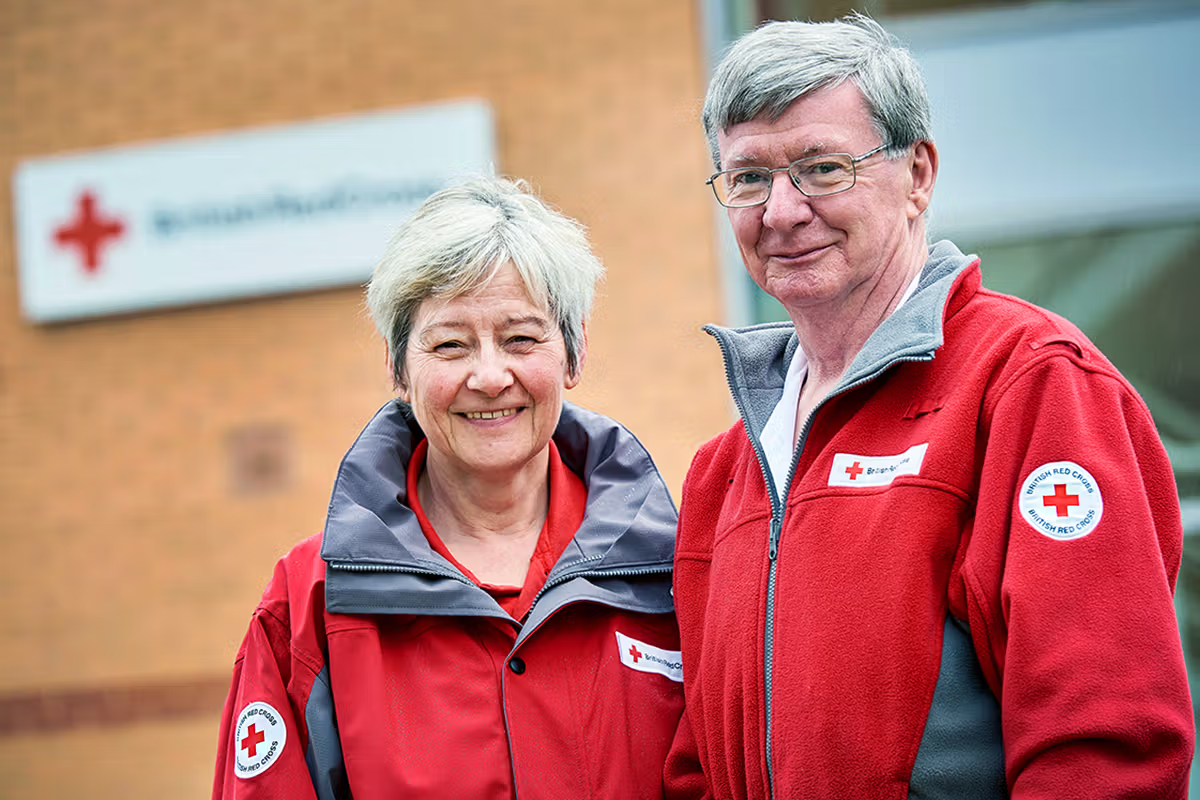
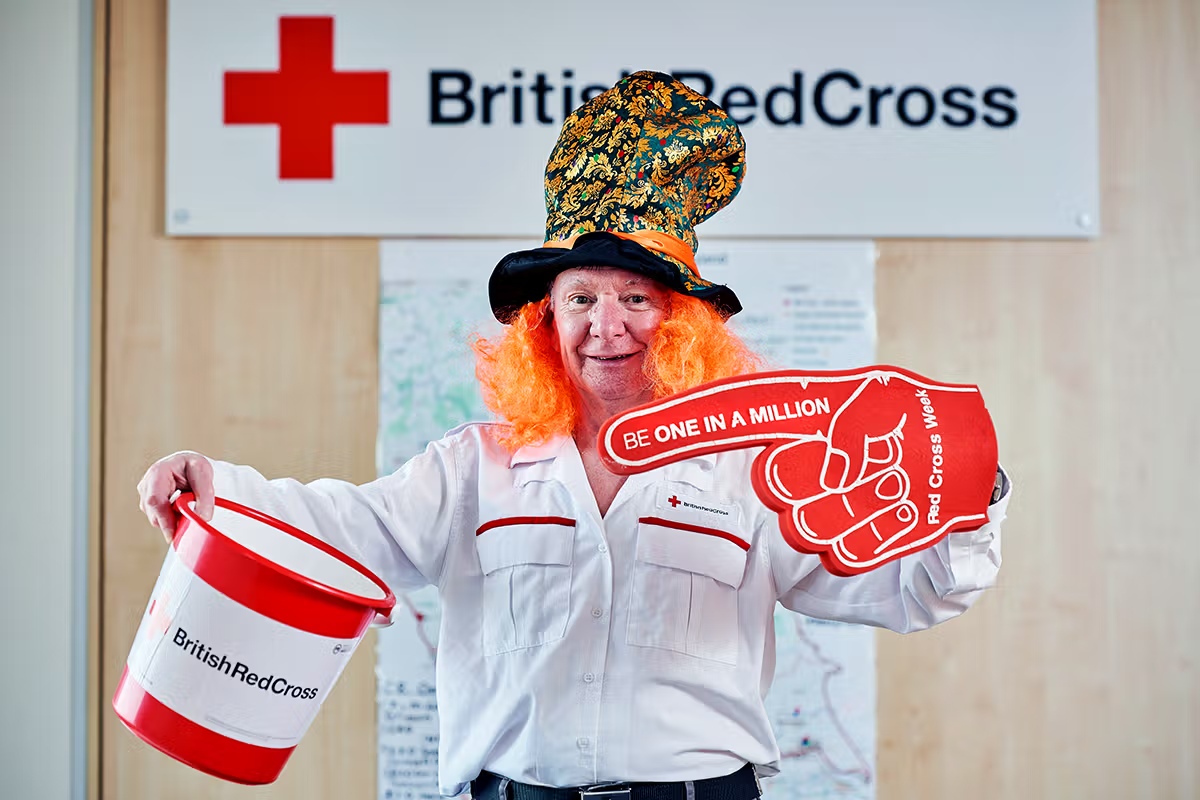
These British Red Cross portraits establish the fundraising context without allowing campaign material to overwhelm the volunteers themselves. Expression, activity and identity remain part of the picture.

Live Activity • Public Space • Regional Context
Public campaigns change what the photographer can control
Public events introduce circumstances that do not exist in a controlled portrait session. Crowds move, backgrounds change, weather intervenes and important moments may happen only once. The photographer cannot arrange every element of the scene.
What can be controlled is attention: recognising the moments that explain the activity, retaining useful organisational context and collecting enough visual variety for the photographs to work beyond a single immediate use.
The Liverpool, London and Southampton examples below are visibly different because the assignments themselves were different. Consistency does not require identical photographs. It requires a consistent understanding of what the pictures need to communicate.
Liverpool • London • Southampton
Three public assignments show how scale, operational activity, participants and location each contribute different evidence.


Local Access • Shared Brief • Picture Desk
One brief across different UK locations
A national organisation may need photography in several places without wanting every location to produce a completely different visual record. The challenge is not to make the photographs identical. It is to preserve the same communications priorities while allowing each real location and activity to remain visible.
In UNP’s model, photographers work locally while the Picture Desk coordinates the brief, scheduling and delivery. The central requirement can therefore remain consistent while the photographer responds to the people, environment and activity actually encountered on location.
The British Red Cross archive demonstrates that relationship particularly clearly. Norwich, Camborne, Corby and Ballymena do not look alike and should not be made to look alike. What connects them is the requirement to return photographs that communicate the organisation, people and purpose clearly enough to belong to the same wider body of work.
This operating model is explained further in UNP’s Multi-Location Photographer UK service and nationwide coverage map.
Community stories • Regional teams • Stakeholder visits
The photographic treatment changes with the evidence required: a volunteer portrait, a conversation, a formal visit and a community case study are not the same assignment.


Dignity • Consent • Safeguarding • Representation
Dignity, consent and professional judgement
Charity assignments may involve volunteers, beneficiaries, community participants or people discussing personal experiences. The photographer therefore needs to know the conditions of the assignment: who may be photographed, what has been agreed, whether safeguarding or identification restrictions apply and what the photographs are intended to communicate.
Those questions cannot be answered simply by looking through the viewfinder. The commissioning organisation holds information the photographer may not possess, while the photographer must still exercise judgement about timing, proximity, expression and when not to make a photograph.
Responsible photography does not require removing emotion or difficult realities. It requires avoiding a misleading representation of the people or circumstances being documented. The charity’s policies, the conditions of the brief and professional judgement all remain relevant.
This distinction extends beyond charity work. Our Photography in Public Places Insight examines more broadly why taking a photograph, subsequently using it and deciding whether it is professionally appropriate are related but distinct questions.
Partnerships • Conferences • Stakeholders
When charity photography crosses organisational boundaries
Charity communications do not always sit neatly within one sector. Corporate partnerships, conferences and stakeholder programmes can bring charity representatives, employees, leadership, speakers and participants into the same assignment.
The photograph may therefore need to establish more than attendance. It may need to show the relationship between organisations, the subject of a discussion, participation in an activity or the scale and character of an event.
This is where photographic disciplines overlap. The assignment may draw on corporate photography and event photography, but the visible evidence still needs to reflect what actually happened rather than forcing the occasion into a predetermined corporate style.

Published Use • Named Credits • Communications Reach
Published charity photography and third-party use
Publication by another organisation establishes something specific: the photograph travelled beyond UNP’s own website and the commissioning workflow into an external communications or editorial context. It does not, by itself, prove every claim that could be made about the assignment.
UNP’s Picture Desk archive contains thousands of British Red Cross and wider charity images. Public web pages, however, do not always retain the original photographer byline or credit, so searchable named credits represent only part of that wider archive and publication history.
North Wales Freemasons used UNP photography in its report on the British Red Cross Pathways to Better Health initiative, with the published credit Photo by Neil O’Connor (UNP). That page independently records a relationship between the initiative, the published photograph and UNP.
Earlier British Red Cross retail and fundraising activity appeared in Designer Red Cross for Christmas bargains on The Women’s Room, where the photography was credited to Peter Langdon / UNP.
SomersetLive’s coverage of a British Red Cross volunteer appeal provides a further example of UNP imagery appearing in regional news. The public article does not display a photographer byline, illustrating why publication evidence and searchable photographer credits are not necessarily the same thing.
Selection • Captions • Metadata • Delivery
The photograph is only part of the communications asset
A useful photograph can lose value if the people, place or activity cannot later be identified. Names, roles, organisations, locations, dates and contextual details matter particularly when several volunteers, partners or regional sites appear within one body of work.
UNP’s Picture Desk can supply edited files with agreed captions, identifiers and metadata for press, PR and digital workflows. The information available depends on the brief and what the commissioning team can establish accurately.
Intended use also affects what the photographer needs to collect. Landscape, portrait and social-ready framing can be considered before the assignment so that useful alternatives are photographed at source rather than created later from unsuitable crops.
The wider lesson is straightforward: a communications photograph is more useful when its visual evidence and its accompanying information remain connected.
Requirement • Evidence • Assignment
What the archive tells us about briefing a charity photographer
The British Red Cross assignments shown here differ in location, activity and photographic treatment, but they point towards the same practical briefing principle: identify what the photographs need to establish before deciding what they should look like.
That means identifying the people and activity that matter, the location and timing, any access or safeguarding requirements, essential organisational context, the caption information available and the channels in which the photographs are expected to work.
For multi-location work, a shared national requirement can sit alongside local information about contacts, participants, access and activity. The common brief protects the purpose of the campaign; the local information allows the photographer to respond to reality.
Another substantial body of UNP charity evidence can be seen in the Comic Relief and Red Nose Day photographer case study, covering charity campaigns, corporate partnerships, community activity and live events.