UNP Archive Case Study • Hospitality PR Photography • London & UK
PR Photographer in London: Hospitality Branding for Pizza Hut
A PR photographer in London needs to do more than make a restaurant look attractive. The photography must communicate the brand, the customer experience, the people behind the operation and the practical reality of the venue—all in images that a communications team can use across PR, corporate, digital and editorial channels.
This archive case study uses commissioned Pizza Hut photography to explain how UNP approaches hospitality briefs in live locations. For current London coverage, visit our Photographer in London page or explore UNP’s nationwide PR Photographer service.
Archive context: these photographs document completed client assignments. The UK restaurant operator and estate subsequently changed; the images are presented as evidence of UNP’s photography and Picture Desk delivery, not as a description of the brand’s current operating structure.
- Sector
- Hospitality, restaurants and foodservice
- Assignment focus
- Brand environment, interiors, people and live service
- Communications uses
- PR, corporate communications, digital content and editorial outreach
- Operational challenge
- Working efficiently in active customer-facing locations
- Coverage model
- London and UK photographers coordinated through the UNP Picture Desk
- Delivery priorities
- Consistent editing, useful captions, metadata and channel-ready files
The communications requirement
What a Hospitality Photography Brief Must Communicate
Hospitality photography has to make a physical experience understandable before somebody enters the venue. A communications manager may need a clear exterior, a strong view of the interior, recognisable brand details, staff at work and images that show how customers move through the space. The complete set should explain where the story is happening, what is distinctive about the offer and how the venue feels in use.
That creates a different challenge from conventional property photography. An empty room can show layout and design, but it may not communicate energy, service or human experience. A busy room can feel authentic, but uncontrolled backgrounds, customer privacy and constantly changing light can make the images harder to use. The photographer has to balance atmosphere with clarity.
The intended outcome also changes the coverage. A restaurant opening may require publicity images and local context. A refurbishment brief may prioritise design, signage and customer flow. An internal communications assignment may concentrate on teams and operational detail, while an event within a hospitality venue may need speakers, guests, branding and key interactions. UNP’s Picture Desk identifies those priorities before selecting the photographer and shaping the running order.
Colour, identity and place
How a PR Photographer in London Turns Interiors into Brand Imagery
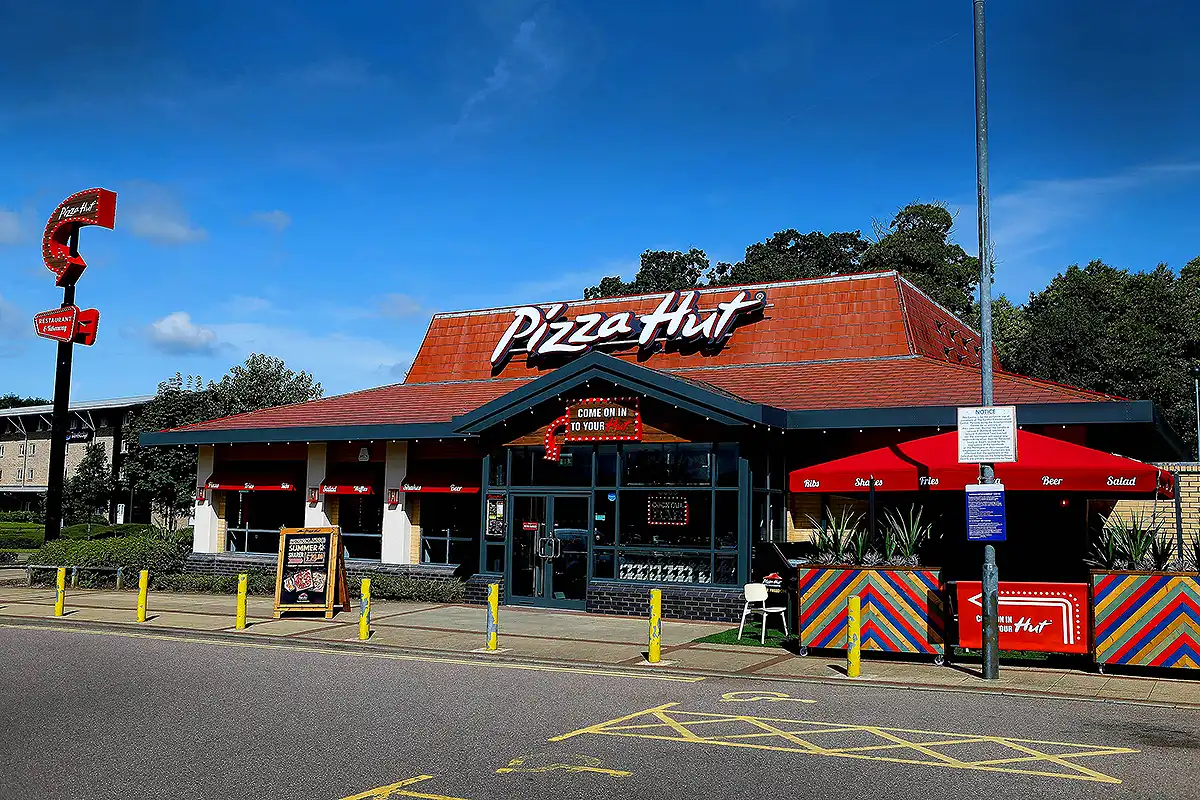
The Pizza Hut assignments demonstrate how interiors can carry a brand story. Illuminated signs, saturated colour, materials, seating, food displays and the relationship between front-of-house and kitchen areas all contribute visual information. The aim is not to catalogue every fixture. It is to find frames in which design and operation reinforce one another.
London venues can add practical constraints: limited access windows, compact spaces, customers arriving throughout the shoot and several stakeholders working to the same launch or campaign deadline. An experienced PR photographer in London anticipates those pressures, works quickly and returns a varied set rather than relying on one visually impressive but inflexible hero image.
Variety matters because the same assignment may need to work as a wide website banner, a landscape press image, a square social crop, a portrait feature or a detail supporting a longer article. Composing with those later uses in mind protects both the subject and the message when picture editors and communications teams adapt the files.
Commissioned photography
Hospitality Branding Through Details, Space and Service
The frames below show why a useful hospitality image library needs more than one type of picture. Details establish identity, wider views explain the venue, and people or operational moments make the environment believable.
Branded details and visual recognition


Space, service and the people behind the venue


Real hospitality environments
Photographing People and Live Service Without Losing Control
A live restaurant cannot always be treated like a closed studio. Staff still have operational responsibilities, food presentation changes quickly, reflective surfaces affect lighting and customer areas may only be available for short periods. The photographer needs to read the room, communicate clearly with the site contact and secure the priority frames before conditions change.
People also need direction that feels appropriate to the brief. A staff portrait can be organised efficiently without becoming stiff, while an operational frame should retain enough context to show what the subject is doing. Where customers or invited guests are included, consent, releases and any client-specific restrictions should be agreed in advance rather than left to chance on the day.
This is where PR, corporate and event disciplines often overlap. A publicity-led launch is best routed through UNP’s PR Photographer service. Leadership, workplace and stakeholder requirements may draw on our Corporate Photographer team, while openings, activations, conferences and guest programmes can be supported through Event Photographer coverage. The Picture Desk can combine those requirements within one assignment rather than forcing the brief into an artificial category.
One campaign across several venues
Keeping Hospitality Photography Consistent Across Multiple Locations
National hospitality groups rarely need photography in only one place. A campaign might cover new openings, refurbishments, franchise partners, menu activity, staff stories or community events in different regions. The logistical task is to preserve the campaign’s visual priorities while recognising that every venue has its own layout, light, access and operating rhythm.
UNP’s Multi-Location Photographer UK service gives communications teams one commissioning route for that work. The central brief defines mandatory frames, preferred orientation, naming conventions, people information, brand controls and delivery deadlines. Local photographers then work intelligently within those parameters instead of trying to make visibly different sites look artificially identical.
The result should feel like one campaign, not a folder of unrelated local shoots. Central coordination also reduces repeated administration for the client: one Picture Desk can manage photographer allocation, site contacts, schedule changes, incoming files, caption checks and the final delivery structure.
From shoot to usable asset library
Planning Delivery for PR, Corporate and Event Teams
The value of hospitality photography is determined partly by what happens after the shoot. Communications teams need to know which venue is shown, who appears in the frame, what activity is taking place and which files meet each channel requirement. Clear captions and structured filenames make a set easier to distribute, approve, archive and find again.
Where editorial or publicity use is planned, UNP can incorporate descriptive captions and IPTC photo metadata. The delivery can also distinguish high-resolution masters from web-ready files and requested social crops. That is especially useful when the same restaurant story must move quickly between a press office, agency team, brand newsroom, internal channel and social publisher.
A professional set should include enough breadth to remain useful beyond one announcement: establishing views, medium scenes, people, operational activity, details, clean branding and alternative compositions. This gives picture editors and campaign teams genuine choice while keeping the imagery connected to the original brief.
A stronger commissioning brief
What to Give Your Hospitality Photographer Before the Shoot
A useful brief does not need to prescribe every frame, but it should make the communications purpose unambiguous. Before confirming a PR photographer in London or coordinating a wider hospitality rollout, it helps to provide:
- the campaign, announcement or business reason behind the photography;
- the venue address, access window, opening hours and named site contact;
- priority spaces, people, products, services and brand details;
- any customer, safeguarding, release, security or food-preparation restrictions;
- the intended press, PR, corporate, event, internal and social uses;
- essential landscape, portrait, square or vertical requirements;
- correct names, job titles, venue information and caption context; and
- the approval route and delivery deadline, including any rapid selects.
UNP’s Picture Desk can turn that information into a practical photographer brief and running order. For a London-only assignment, the desk can select a suitable local specialist. For several venues, it can coordinate the locations as one programme with a shared visual and delivery standard.
Questions for communications teams
Frequently Asked Questions About Hospitality PR Photography
Practical answers for PR, corporate, marketing and event managers planning restaurant, hotel, venue or foodservice photography.
Can UNP photograph a hospitality venue while it is open?
Yes. UNP photographers regularly work in live customer-facing environments. The brief should identify peak periods, restricted areas, customer permissions and the priority frames so the photographer can work efficiently without unnecessarily interrupting service.
Can one brief cover restaurants or venues in several UK locations?
Yes. The UNP Picture Desk can coordinate photographers in several locations under one central brief, with shared priorities for composition, people, brand context, captions, file naming and delivery.
Should we commission PR, corporate or event photography?
It depends on the main output. PR photography supports campaigns, launches and publicity; corporate photography supports business, people and stakeholder communications; event photography records scheduled gatherings and their participants. Many hospitality briefs combine all three, and UNP can plan the coverage around the required outputs.
Can the photographer supply social and press-ready image formats?
Yes. Requirements for high-resolution masters, web files, landscape banners, portrait images and selected social crops can be agreed at briefing stage. The photographer can compose with those uses in mind, and the final delivery can be organised by channel or location.
Do hospitality images include captions and metadata?
They can. For press, PR and managed multi-site work, UNP can supply useful caption information and IPTC metadata covering the venue, people, location and assignment context provided by the client.